SECTION A: Leading Suction Strainer Exporter in India: Quality Standards
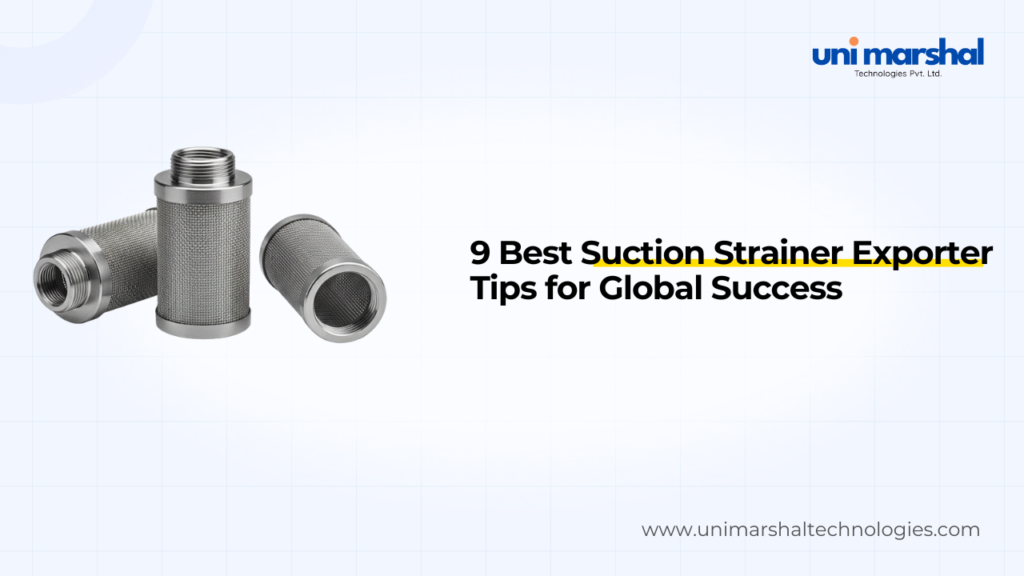
Suction Strainer Exporter plays a critical role in protecting hydraulic systems from early damage. A suction strainer sits at the pump inlet and stops large particles before they enter the system.
In industrial hydraulics, poor filtration at the suction stage leads to pump failure, noise, and energy loss. This is why quality standards matter more than price alone.
Why Quality Standards Matter in Suction Strainers
A suction strainer works under continuous oil flow and pressure changes. If quality is compromised, the entire hydraulic system suffers.
Key reasons quality standards are essential:
- Prevent pump cavitation and inlet starvation
- Maintain smooth oil flow without pressure drop
- Extend pump and valve life
- Reduce unplanned downtime
- Lower long-term maintenance cost
A reliable exporter follows strict inspection and material control at every stage.
What Defines a Trusted Exporter
A professional exporter does more than supply products. They focus on consistency, compliance, and performance.
Key practices followed by top exporters:
- Use of tested raw materials like stainless steel and high-grade alloys
- Precision mesh selection for correct micron rating
- Dimensional accuracy for easy installation
- Batch-level quality checks before dispatch
A well-established Suction Strainer Exporter in India also understands international operating conditions and packaging standards.
Quality Standards Followed in Manufacturing
The table below explains the core quality areas and what they mean for the user:
| Quality Area | What It Covers | User Benefit |
| Material Strength | Corrosion-resistant metal and rigid frames | Longer service life |
| Filtration Accuracy | Controlled mesh size and flow rate | Clean oil intake |
| Pressure Handling | Designed for suction-side conditions | No pump stress |
| Fit and Finish | Proper sealing and threading | Leak-free installation |
| Testing Process | Flow and durability testing | Reliable performance |
This table helps users quickly understand what to check before selecting a supplier.
How Export Quality Is Maintained
Export-grade suction strainers go through structured checks.
Common quality control steps include:
- Visual inspection for welds and mesh integrity
- Flow testing under real conditions
- Dimensional verification against drawings
- Cleanliness checks before packing
These steps ensure the product performs consistently across different markets.
Application-Based Design Approach
A quality-focused exporter designs strainers based on real usage.
Common applications include:
- Hydraulic power packs
- Construction machinery
- Industrial presses
- Mobile hydraulic systems
Each application demands different flow capacity and mesh strength.
What Buyers Should Look For
When choosing a supplier, buyers should focus on performance, not just cost.
Important selection points:
- Clear product specifications
- Standardized quality process
- Consistent supply capability
- Technical support availability
A professional Suction Strainer Exporter delivers clarity, reliability, and system protection through well-defined quality standards.
SECTION B: High-Performance Suction Strainer Exporter in UAE for Oil & Gas
Suction Strainer Exporter support is critical in UAE oil and gas operations where hydraulic systems face heat, pressure, and continuous load. Suction strainers protect pumps at the inlet stage.
Oil and gas environments demand filtration that performs without failure. Poor inlet filtration causes pump cavitation, flow loss, and unexpected shutdowns.
Why Oil & Gas Systems Need High-Performance Suction Strainers
Hydraulic systems in oil and gas run non-stop. Contamination at the suction side creates long-term damage.
Key operational challenges include:
- High operating temperatures
- Continuous flow under heavy load
- Presence of metal particles and debris
- Limited downtime for maintenance
High-performance suction strainers reduce these risks at the source.
Role of a Specialized Exporter in UAE Market
A professional exporter understands regional working conditions. UAE oil and gas facilities require robust and tested filtration solutions.
A trusted Suction Strainer Exporter in UAE focuses on:
- Heat-resistant materials
- Stable flow design for large pumps
- Strong mesh support under suction pressure
- Compliance with industrial quality standards
This approach ensures reliable operation across offshore and onshore sites.
Key Performance Standards for Oil & Gas Applications
The table below explains what high performance means in real use:
| Performance Area | Design Focus | Practical Benefit |
| Temperature Resistance | Heat-stable metal and mesh | No deformation |
| Flow Capacity | Optimized open area design | Smooth oil intake |
| Structural Strength | Reinforced body and support | Prevents collapse |
| Filtration Control | Accurate micron rating | Protects pump internals |
| Service Access | Easy cleaning design | Faster maintenance |
This table helps users quickly evaluate suitability for oil and gas systems.
Manufacturing Practices That Ensure Reliability
Export-grade suction strainers follow controlled production steps.
Important quality practices include:
- Material traceability for each batch
- Precision welding and mesh fixing
- Flow and pressure testing before packing
- Visual and dimensional inspections
These steps reduce failure risks in critical installations.
Application-Based Design for Oil & Gas Use
Oil and gas systems vary by application. Exporters design strainers based on system demand.
Common usage areas:
- Hydraulic power units
- Offshore drilling equipment
- Pipeline control systems
- Heavy-duty valves and actuators
Each application requires a specific flow rate and mesh strength.
What Buyers Should Evaluate Before Selection
Choosing the right exporter impacts system reliability.
Key evaluation points:
- Clear technical specifications
- Proven export experience
- Consistent quality control process
- Understanding of oil and gas conditions
A reliable Suction Strainer Exporter delivers performance-focused filtration built for demanding UAE oil and gas environments.
SECTION C: Choosing a Suction Strainer Exporter in USA for ASME Compliance
Suction Strainer Exporter selection becomes critical when systems must meet ASME compliance. In the USA, hydraulic and industrial systems follow strict mechanical and safety standards.
ASME compliance ensures components handle pressure, flow, and material stress safely. Suction strainers must meet these expectations at the pump inlet stage.
Why ASME Compliance Matters for Suction Strainers
ASME standards focus on safety, strength, and performance consistency. Non-compliant strainers increase operational and legal risks.
Key reasons compliance is important:
- Safe pressure handling
- Reliable material strength
- Predictable performance under load
- Reduced inspection failures
- Improved system credibility
ASME-aligned products support long-term system reliability.
What to Expect from a USA-Based Exporter
A professional Suction Strainer Exporter in USA understands regulatory expectations and industrial use cases. They align design and testing with ASME guidelines.
Key exporter capabilities include:
- Knowledge of ASME material requirements
- Controlled manufacturing processes
- Detailed technical documentation
- Consistent product traceability
These factors reduce compliance gaps during audits.
ASME-Focused Design and Manufacturing Elements
The table below explains how ASME compliance reflects in suction strainer design:
| ASME Requirement Area | What Exporter Follows | User Advantage |
| Material Standards | Approved metals and grades | Structural safety |
| Pressure Tolerance | Designed for suction conditions | Pump protection |
| Dimensional Accuracy | Precision fabrication | Proper system fit |
| Weld Quality | Tested and inspected joints | No structural failure |
| Documentation | Material and test records | Easy compliance checks |
This table helps users understand how compliance impacts real-world use.
Quality Control Practices That Support Compliance
Export-grade suction strainers go through defined inspections.
Common quality checks include:
- Material verification before production
- Visual inspection of mesh and joints
- Dimensional measurement after fabrication
- Flow testing under controlled conditions
These steps ensure products meet stated specifications.
Application Areas Requiring ASME Compliance
ASME-compliant suction strainers are widely used in regulated industries.
Typical applications include:
- Industrial hydraulic systems
- Power generation equipment
- Chemical processing units
- Manufacturing automation lines
Each application demands controlled flow and safe operation.
How Buyers Can Evaluate the Right Exporter
Selecting the right exporter requires more than price comparison.
Important evaluation points:
- Clear ASME-related specifications
- Consistent quality assurance process
- Experience with regulated industries
- Transparent technical communication
A dependable Suction Strainer Exporter supports compliance, safety, and performance through disciplined manufacturing and documented standards.

SECTION D: Reliable Suction Strainer Exporter in Canada for Mining Needs
Suction Strainer Exporter reliability is essential in Canadian mining operations where hydraulic systems operate under dust, vibration, and extreme weather conditions. Suction strainers protect pumps from large particles at entry level.
Mining sites demand equipment that performs continuously with minimal failure. Inlet filtration plays a direct role in system uptime and component life.
Why Mining Applications Need Strong Suction Strainers
Mining hydraulics face harsh operating environments. Contaminants enter the system easily during excavation and material handling.
Common mining challenges include:
- Heavy dust and abrasive particles
- Continuous shock and vibration
- Cold climate operation
- Limited access for frequent maintenance
Suction strainers reduce damage before contaminants reach sensitive components.
Importance of a Canada-Focused Exporter
A reliable Suction Strainer Exporter in Canada understands mining regulations, climate conditions, and equipment demands. Products must handle both pressure and environmental stress.
Exporter focus areas include:
- Strong body construction for impact resistance
- Stable mesh structure for abrasive particles
- Materials suitable for cold temperatures
- Consistent performance under long operating cycles
This ensures compatibility with mining equipment used across regions.
Performance Requirements for Mining Operations
The table below explains key requirements and how they support mining systems:
| Mining Requirement | Design Consideration | System Benefit |
| Abrasion Resistance | Reinforced mesh and frame | Reduced wear |
| High Flow Handling | Large open area design | Smooth pump suction |
| Structural Durability | Rigid metal housing | No deformation |
| Cold Condition Support | Material stability | Reliable winter operation |
| Easy Cleaning | Service-friendly design | Faster maintenance |
This table helps users quickly understand suitability for mining use.
Manufacturing and Quality Control Practices
Export-grade suction strainers follow strict checks to ensure durability.
Common quality steps include:
- Raw material inspection
- Mesh strength testing
- Dimensional accuracy checks
- Visual inspection before dispatch
These controls support consistent performance in demanding sites.
Mining Equipment Where Suction Strainers Are Used
Suction strainers support multiple hydraulic systems in mining operations.
Typical applications include:
- Excavators and loaders
- Drilling rigs
- Crushing and screening units
- Hydraulic power packs
Each system requires stable oil flow and contamination control.
What Mining Buyers Should Evaluate
Selecting the right exporter impacts operational continuity.
Key evaluation points:
- Product strength and material quality
- Clarity of technical specifications
- Consistent export supply capability
- Understanding of mining operating conditions
A reliable exporter supports mining productivity by delivering suction strainers designed for harsh Canadian mining environments.
SECTION E: Efficient Suction Strainer Exporter in Mexico: Logistics & Supply
Suction Strainer Exporter efficiency is crucial when industrial projects depend on timely delivery and stable supply. In Mexico, logistics and coordination play a major role in hydraulic component sourcing.
Industries rely on suction strainers to protect pumps at the inlet stage. Any delay in supply can slow production and increase downtime.
Why Logistics Matter in Suction Strainer Supply
Hydraulic systems often operate on tight schedules. Delayed components affect installation and maintenance planning.
Common logistics challenges include:
- Long transit times
- Improper packaging damage
- Customs clearance delays
- Inconsistent shipment schedules
Efficient logistics reduce operational risk for buyers.
Importance of a Mexico-Based Supply Network
A dependable Suction Strainer Exporter in Mexico understands regional transport routes, industrial zones, and export procedures. This helps ensure smoother order fulfillment.
Key supply advantages include:
- Faster regional dispatch
- Reduced transit handling
- Better coordination with freight partners
- Predictable delivery timelines
Local logistics knowledge improves supply reliability.
Key Logistics Factors Buyers Should Understand
The table below explains how logistics efficiency supports smooth operations:
| Logistics Area | Exporter Focus | Buyer Benefit |
| Inventory Planning | Stock readiness | Faster order fulfillment |
| Packaging Standards | Secure and labeled packing | Damage-free delivery |
| Export Documentation | Accurate shipment papers | Smooth customs clearance |
| Transport Coordination | Trusted freight handling | On-time arrival |
| Order Tracking | Shipment visibility | Better planning |
This table helps users quickly understand how logistics impacts supply efficiency.
Supply Chain Practices That Improve Reliability
Efficient exporters follow structured supply processes.
Common practices include:
- Advance production scheduling
- Standardized packaging methods
- Pre-dispatch quality checks
- Shipment tracking coordination
These steps reduce last-minute delays and confusion.
Industries in Mexico That Depend on Timely Supply
Many sectors rely on consistent suction strainer availability.
Common industries include:
- Manufacturing plants
- Automotive production lines
- Construction equipment suppliers
- Industrial hydraulic service providers
Each sector requires predictable delivery to avoid downtime.
What Buyers Should Evaluate Before Ordering
Choosing the right exporter goes beyond product quality.
Important evaluation points:
- Lead time transparency
- Packaging and handling standards
- Export experience and process clarity
- Communication during shipment stages
Clear logistics planning helps buyers manage installation schedules with confidence.
How Efficient Supply Supports System Performance
Timely delivery ensures maintenance and replacements happen without delay. This keeps hydraulic systems protected and operating smoothly.
Efficient logistics and supply management strengthen trust between exporter and buyer, especially in fast-moving industrial environments across Mexico.
SECTION F: Top Suction Strainer Exporter in Australia for Water Treatment
Suction Strainer Exporter selection is important for water treatment systems where clean intake flow protects pumps and treatment equipment. Suction strainers stop debris before water enters the system.
Water treatment facilities run continuously. Any blockage or damage at the suction point affects filtration quality and plant efficiency.
Why Water Treatment Systems Need Suction Strainers
Raw water often contains sand, algae, and solid particles. These contaminants cause pump wear and flow restriction.
Common challenges in water treatment include:
- Variable water quality
- Continuous operation cycles
- Large flow volumes
- Limited downtime for maintenance
Suction strainers help control contamination at the entry stage.
Role of an Exporter Serving Australian Water Facilities
A dependable Suction Strainer Exporter in Australia understands environmental standards, water quality variations, and system design needs.
Exporter focus areas include:
- Corrosion-resistant materials
- Stable flow design for high volumes
- Easy-to-clean strainer construction
- Compatibility with treatment equipment
This ensures consistent performance across municipal and industrial plants.
Key Performance Expectations in Water Treatment Use
The table below explains what water treatment systems require from suction strainers:
| Requirement Area | Design Feature | Operational Benefit |
| Corrosion Control | Non-reactive materials | Longer service life |
| Flow Stability | Large open filtration area | Consistent intake |
| Particle Retention | Controlled mesh size | Pump protection |
| Maintenance Ease | Removable strainer elements | Quick cleaning |
| Structural Strength | Rigid body construction | No deformation |
This table helps users understand suitability for water treatment applications.
Quality and Compliance Practices
Export-grade suction strainers follow defined quality procedures.
Common practices include:
- Material inspection before fabrication
- Dimensional accuracy checks
- Flow testing under operating conditions
- Visual inspection before dispatch
These steps support reliable performance in water treatment environments.
Applications Within Water Treatment Facilities
Suction strainers are used across multiple stages of treatment.
Typical application areas include:
- Raw water intake systems
- Pumping stations
- Filtration and clarification units
- Sludge handling equipment
Each application requires stable flow and contamination control.
What Buyers Should Consider During Selection
Choosing the right exporter improves system reliability.
Key evaluation points:
- Product compatibility with water quality
- Ease of maintenance
- Consistent supply capability
- Technical clarity in specifications
Proper selection supports efficient water treatment operations across Australia.

SECTION G: Trusted Suction Strainer Exporter in Singapore for Marine Use
Suction Strainer Exporter selection is vital for marine systems where equipment operates in saltwater, humidity, and constant motion. Suction strainers protect pumps by stopping debris at the intake stage.
Marine environments are unforgiving. Corrosion, suspended particles, and continuous vibration place extra stress on hydraulic and fluid systems onboard vessels.
Why Marine Systems Require Specialized Suction Strainers
Ships and offshore platforms rely on uninterrupted fluid flow. Any failure at the suction point can affect navigation, safety, and operations.
Common marine challenges include:
- Saltwater corrosion
- Floating debris and sediments
- Continuous vibration and movement
- Limited access for maintenance
Suction strainers reduce pump damage and support steady system performance.
Importance of Exporters Serving Marine Industries
A trusted Suction Strainer Exporter in Singapore understands port operations, marine regulations, and shipboard equipment requirements. Products must perform reliably in harsh sea conditions.
Exporter focus areas include:
- Corrosion-resistant materials
- Strong structural design
- Stable filtration under motion
- Compact design for limited space
This approach supports long-term marine reliability.
Key Design Requirements for Marine Applications
The table below explains essential marine requirements and their benefits:
| Marine Requirement | Design Approach | System Benefit |
| Corrosion Resistance | Marine-grade metals | Longer service life |
| Flow Stability | Optimized open area | Consistent intake |
| Structural Strength | Reinforced housing | Withstands vibration |
| Particle Control | Controlled mesh size | Pump protection |
| Easy Maintenance | Removable elements | Faster servicing |
This table helps users quickly judge marine suitability.
Quality Practices for Marine-Grade Supply
Marine suction strainers follow strict quality checks to ensure safety and durability.
Common practices include:
- Material verification for corrosion resistance
- Weld inspection for structural integrity
- Dimensional accuracy checks
- Flow testing under simulated conditions
These steps reduce the risk of onboard failures.
Marine Systems Using Suction Strainers
Suction strainers support many onboard systems across vessels.
Typical applications include:
- Engine cooling systems
- Hydraulic steering units
- Ballast water systems
- Marine power packs
Each system depends on clean and stable fluid intake.
What Marine Buyers Should Evaluate
Selecting the right exporter protects both equipment and operations.
Key evaluation points:
- Suitability for saltwater environments
- Ease of cleaning during port stops
- Consistent export and supply capability
- Clear technical specifications
A dependable Suction Strainer Exporter supports safe and efficient marine operations by delivering filtration solutions designed for demanding sea conditions.
SECTION H: How a Suction Strainer Exporter in Brazil Supports Agriculture
Suction Strainer Exporter support is essential in agriculture where pumps handle water mixed with soil, organic matter, and debris. Suction strainers protect irrigation and hydraulic systems at the intake level.
Agricultural equipment works long hours in open fields. Clean fluid intake directly affects pump life, water flow, and overall productivity.
Why Agriculture Depends on Suction Strainers
Farming systems often draw water from canals, rivers, and storage tanks. These sources contain solid particles that damage pumps.
Common agricultural challenges include:
- Mud, sand, and crop residue
- Seasonal water quality changes
- Continuous pump operation
- Limited time for equipment repair
Suction strainers reduce early wear and unexpected failures.
Role of Exporters in Brazilian Agriculture
A reliable Suction Strainer Exporter in Brazil understands local farming practices, climate conditions, and irrigation methods. Products must perform under heavy usage and varying water quality.
Exporter focus areas include:
- Durable materials for outdoor use
- Stable flow design for irrigation pumps
- Easy cleaning without special tools
- Compatibility with agricultural machinery
This helps farmers maintain uninterrupted operations.
How Suction Strainers Improve Farm Equipment Performance
The table below explains agricultural needs and matching strainer benefits:
| Agricultural Need | Strainer Feature | Practical Benefit |
| Dirty Water Intake | Strong mesh filtration | Pump protection |
| High Flow Demand | Large open area design | Steady irrigation |
| Long Operating Hours | Rigid construction | Reduced breakdowns |
| Easy Maintenance | Removable elements | Quick field cleaning |
| Seasonal Use | Durable materials | Reliable reuse |
This table helps users quickly understand agricultural suitability.
Manufacturing and Quality Practices for Farm Use
Export-grade suction strainers follow controlled production processes.
Key quality practices include:
- Material inspection for strength
- Mesh fixing checks
- Dimensional accuracy verification
- Visual inspection before dispatch
These checks support consistent field performance.
Agricultural Applications Using Suction Strainers
Suction strainers are used across various farming systems.
Common applications include:
- Irrigation pump sets
- Sprayer systems
- Tractor hydraulic circuits
- Water transfer units
Each system requires stable flow and reduced contamination.
How Export Support Improves Farming Efficiency
Timely supply and correct specifications help farmers avoid delays during planting and harvesting seasons. Exporters with agricultural focus understand urgency and operational pressure.
Consistent product availability and technical clarity support smooth farm operations.
What Farmers and Buyers Should Evaluate
Selecting the right supplier impacts long-term productivity.
Important evaluation points:
- Ease of maintenance in field conditions
- Strength against abrasive particle
- Clear product specifications
- Proven agricultural application knowledge
A Best Suction Strainer Exporter delivers reliability, durability, and system protection that supports efficient agricultural operations across Brazil.
SECTION I: Global Export Checklist: Managing Lead Times and Bulk Orders
Suction Strainer Exporter planning is critical when handling global shipments, bulk quantities, and strict delivery schedules. Lead time management directly affects project timelines and operational readiness.
Bulk orders require coordination between production, quality checks, packaging, and shipping. A structured export checklist helps avoid delays and supply gaps.
Why Lead Time Control Matters in Global Exports
International buyers depend on accurate delivery commitments. Poor planning causes installation delays and inventory pressure.
Common lead time challenges include:
- Raw material availability
- Production scheduling conflicts
- Quality inspection delays
- Shipping and customs clearance
Clear planning reduces these risks.
What Makes Bulk Orders More Complex
Large-volume orders involve more than increased quantity. They require process control and coordination.
Key bulk order considerations include:
- Production capacity planning
- Consistent quality across batches
- Secure packaging for long transit
- Clear shipment sequencing
Reliable Suction Strainer Exporter manages these elements without compromising quality.
Export Checklist for Smooth Order Execution
The table below outlines key checklist items and their purpose:
| Checklist Area | What to Confirm | Why It Matters |
| Order Details | Specifications and quantity | Avoid rework |
| Production Plan | Capacity and timelines | On-time delivery |
| Quality Checks | Inspection schedule | Consistent performance |
| Packaging Method | Export-safe packing | Damage prevention |
| Shipping Plan | Mode and transit time | Predictable arrival |
This table helps buyers understand each export stage clearly.
Communication Practices That Reduce Delays
Clear communication improves coordination during bulk exports.
Important communication steps include:
- Confirming order details early
- Sharing production timelines
- Providing shipment updates
- Notifying changes immediately
These practices help buyers plan inventory and installation.
Role of Experience in Export Management
Experienced exporters handle unexpected challenges better. They plan buffers and alternative solutions.
A reliable Suction Strainer Exporter anticipates risks and prepares backup plans for materials, production, and logistics.
How Buyers Can Evaluate Export Readiness
Buyers should assess exporter capability before placing bulk orders.
Key evaluation points include:
- Proven bulk order handling experience
- Transparent lead time commitments
- Structured quality control process
- Clear export documentation support
A Best Suction Strainer Exporter demonstrates discipline, clarity, and consistency throughout the export cycle.
How Structured Planning Supports Long-Term Supply
Structured export planning builds trust and reduces operational stress. Buyers benefit from predictable supply and fewer emergency orders.
A dependable Suction Strainer Exporter supports global operations by managing lead times and bulk orders with process-driven execution.