

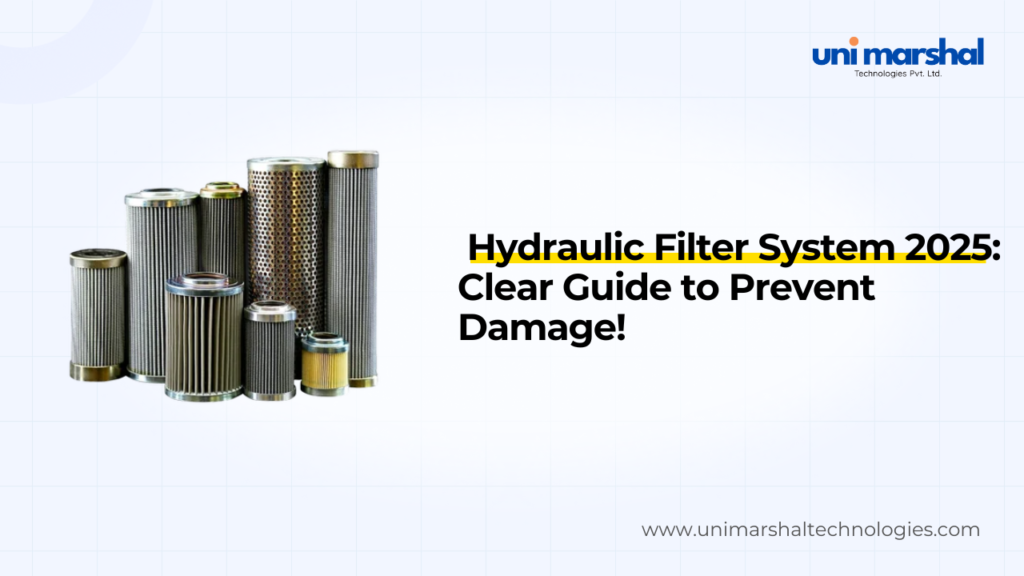
SECTION A : What a Hydraulic Filter Does in a Hydraulic System
=> A hydraulic filter system is essential to keep hydraulic machinery running efficiently.
=> It removes dirt, debris, and contaminants from hydraulic fluid.
=> This ensures smooth operation and prevents equipment damage.
~ How Hydraulic Filters Work
=> Hydraulic filters are simple yet powerful.
=> They capture particles and allow clean fluid to flow through the system.
* Key points about hydraulic filters:
- Protect pumps, valves, and cylinders from wear
- Prevent hydraulic fluid contamination
- Improve system efficiency and lifespan
- Reduce unexpected downtime
=> The hydraulic filter working principle involves forcing the fluid through a filter element that traps particles.
=> Only clean fluid passes through, maintaining system health.
~ Types of Hydraulic Filters
| Filter Type | Purpose | Common Use |
| Suction Filter | Prevents dirt entering pump | Low-pressure suction line |
| Pressure Filter | Cleans fluid before it reaches system | High-pressure systems |
| Return Line Filter | Removes contaminants before fluid returns | Reservoir or tank line |
| Offline/Bypass Filter | Continuously cleans oil in tank | Critical machinery needing extra filtration |
~ Benefits of a Hydraulic Filter System
- Keeps hydraulic fluid clean and free from particles
- Reduces wear and tear of hydraulic components
- Ensures consistent pressure and smooth operation
- Extends machinery life and reduces maintenance costs
~ Signs a Hydraulic Filter Needs Replacement
- Unusual noises from pumps or valves
- Reduced system performance or pressure drops
- Dirty or discolored hydraulic oil
- Frequent overheating of machinery
~ Simple Maintenance Tips
- Regularly check pressure indicators
- Replace filter elements according to manufacturer guidelines
- Inspect for leaks or damage around the filter housing
SECTION B : Why Contamination Is the Biggest Threat to Hydraulic Machinery
=> A hydraulic filter system is critical because contamination can damage every part of a hydraulic system.
=> Even small particles can cause serious problems in machinery.
~ How Contamination Affects Hydraulic Systems
=> Contaminants like dirt, metal particles, and water can reduce efficiency and damage components.
* Key impacts of contamination:
- Increased wear of pumps and valves
- Reduced fluid efficiency and pressure
- Frequent breakdowns and costly repairs
- Shortened equipment lifespan
~ Common Sources of Contamination
| Source | How It Enters the System | Effect on Machinery |
| Dirt & Dust | Through open reservoirs | Clogs filters, causes wear |
| Water | Condensation or leaks | Reduces lubrication, causes corrosion |
| Metal Particles | Component wear or pipe debris | Damages pumps and valves |
| Old Oil | Reused or degraded oil | Reduces system efficiency |
~ Signs of Contaminated Hydraulic Oil
- Unusual noise from pumps or valves
- Drop in hydraulic system pressure
- Fluid appears dark or foamy
- Frequent filter clogging
~ How to Prevent Contamination
- Use high-quality hydraulic filter system with proper micron rating
- Keep reservoirs sealed from dust and moisture
- Regularly monitor hydraulic fluid quality
- Follow maintenance schedules strictly
~ Key Causes to Monitor
- Poor storage of hydraulic oil
- Leaks in hoses or fittings
- Infrequent oil changes
- Improper filtration during maintenance
=> These are the main hydraulic oil contamination causes that operators must watch to protect machinery.
~ Benefits of Contamination Control
- Keeps machinery running smoothly
- Reduces downtime and repair costs
- Extends life of pumps, cylinders, and valves
- Ensures efficient and safe hydraulic operation
SECTION C : How a Hydraulic Filter Protects Pumps, Valves and Cylinders
=> A hydraulic filter system plays a major role in keeping pumps, valves, and cylinders safe from damage.
=> It removes harmful particles before they reach critical components.
~ Why Hydraulic Components Need Protection
=> Hydraulic parts work under high pressure. Even small particles can scratch surfaces and block flow paths. This leads to reduced performance and early failure.
~ Main risks for hydraulic components:
- Wear on internal surfaces
- Reduced oil flow to key parts
- Loss of pressure during operation
- Overheating due to restricted movement
~ How Filters Protect Pumps, Valves, and Cylinders
=> Filters remove dirt, metal, sand, and moisture from the hydraulic oil. Clean oil reduces stress on moving parts and keeps the system stable.
* Core benefits of proper filtration:
- Smooth and steady pressure flow
- Reduced friction inside pumps
- Longer valve life due to clean passageways
- Better cylinder sealing and motion
~ Roles of Different Hydraulic Filters
| Filter Type | Protection Provided | Where It Helps Most |
| Suction Filter | Stops large particles before pump | Protects pump from early wear |
| Pressure Filter | Cleans oil at high pressure | Protects valves and actuators |
| Return Line Filter | Removes dirt before oil returns | Protects reservoir and cylinders |
=> This shows the difference in suction vs return vs pressure filter and how each supports component protection.
~ How Clean Oil Protects Pumps
- Keeps pump gears and vanes free from scoring
- Reduces risk of cavitation due to contamination
- Maintains smooth oil flow to prevent overheating
- Improves pump reliability during heavy loads
~ How Filters Protect Valves
- Prevents blockages in valve channels
- Reduces sticking and slow response
- Keeps valve spools moving freely
- Protects precision surfaces from scratches
~ How Filters Protect Cylinders
- Keeps seals free from dirt and metal particles
- Reduces rod wear and internal scoring
- Supports smooth stroke movement
- Prevents leakage caused by contaminated oil
~ Simple Steps to Improve Component Life
- Inspect filter condition regularly
- Use the right micron rating for the machine
- Replace filters as per service schedule
- Keep hydraulic oil clean and stored properly

SECTION D : Types of Hydraulic Filters and When to use Each One
=> A hydraulic filter system includes different filter types designed to protect machinery in various conditions.
=> Each filter has a specific role based on flow, pressure, and contamination level.
~ Why Different Filters Are Needed
=> Hydraulic machines face different contamination risks. Using the right filter helps maintain stable performance and prevents early wear.
~ Common reasons different filters are used:
- Varying pressure levels in each line
- Different contamination sources
- Unique protection needs for pumps and valves
- System design differences
~ Main Types of Hydraulic Filters
| Filter Type | Where It Is Used | What It Protects |
| Suction Filter | Suction line before pump | Protects pump from large particles |
| Return Line Filter | Line returning oil to tank | Keeps tank and components clean |
| Pressure Filter | High-pressure line after pump | Protects valves and actuators |
| Offline/Bypass Filter | Separate loop in the tank | Provides continuous deep filtration |
=> This covers the difference in suction vs return vs pressure filter and when each one is needed.
~ Suction Filters
=> Suction filters keep large contaminants away from the pump. They ensure safe oil entry and protect the pump from heavy particle load.
* Key benefits:
- Stops big debris early
- Reduces pump damage
- Keeps suction line clean
* Use when:
- Pump needs strong protection from coarse particles
- Working in dusty or open environments
~ Return Line Filters
=> The return line filters clean oil before it enters the reservoir. They capture fine particles collected during operation.
* Key benefits:
- Prevents contaminated oil from entering the tank
- Supports long-term system cleanliness
- Protects cylinders and valves
* Use when:
- Machinery runs continuously
- Oil contamination increases during operation
~ Pressure Filters
=> Pressure filters work in the high-pressure section and protect sensitive components like valves and actuators.
* Key benefits:
- Holds strong pressure loads
- Protects precision parts from fine particles
- Keeps control valves responsive
* Use when:
- Equipment operates under high pressure
- Valves require clean oil for accuracy
~ Offline or Bypass Filters
=> These filters operate separately and clean oil continuously, even when the system is idle.
* Key benefits:
- Offers deep cleaning
- Helps in critical machinery
- Supports stable oil quality
* Use when:
- Machines run long hours
- Extra filtration is needed beyond main lines
SECTION E : How to Choose the Right Hydraulic Filter for Your Equipment
=> A hydraulic filter system must be selected carefully because every machine has different pressure levels, flow needs, and contamination risks.
=> Choosing the right filter helps protect pumps, valves, and cylinders from early damage.
~ Why Choosing the Right Filter Matters
=> Hydraulic equipment works under high pressure.
=> Even small particles affect performance, so picking the correct filter is important for equipment safety.
* Main reasons filter choice is important:
- Reduces breakdowns and wear
- Supports smooth oil flow
- Improves equipment life
- Prevents costly failures
~ Key Factors to Consider
=> Use a structured approach while selecting the right filter. This makes the process simple and effective.
| Factor | What to Check | Why It Matters |
| System Pressure | Low, medium, or high pressure | Helps choose suction, return, or pressure filter |
| Micron Rating | Particle size filter can stop | Keeps oil clean and safe for components |
| Flow Rate | Oil flow per minute | Ensures the filter does not restrict oil |
| Contamination Level | Dust, wear metal, or moisture | Helps match filter to environment |
| Mounting Location | Line type or tank position | Affects filter size and strength |
=> These points form a simple hydraulic filter selection guide for operators and technicians.
~ Choosing by System Pressure
=> Different hydraulic lines require different filter strengths.
i) For low-pressure lines:
- Suction filters are ideal
- They stop large particles before they reach the pump
ii) For medium-pressure lines:
- Return line filters work best
- They clean oil before it returns to the tank
iii) For high-pressure lines:
- Pressure filters are required
- They protect valves and actuators from fine particles
~ Choosing by Micron Rating
=> Micron rating decides what size particles the filter can trap.
* Common micron levels:
- 3 to 10 microns for sensitive valves
- 10 to 25 microns for general protection
- 25+ microns for suction filtering
=> Choose a lower micron rating for equipment that needs precise movement.
~ Choosing by Environment and Machine Type
=> Different machines face different contamination risks.
* Use tighter filtration when:
- Working in dusty construction sites
- Operating heavy machinery for long hours
- Handling sensitive hydraulic controls
* Use stronger housing when:
- Equipment runs at high pressure
- Fluid temperature changes often
~ Practical Tips for Choosing the Right Filter
- Check your equipment manual before selecting
- Keep system pressure and flow requirements in mind
- Match filter type to the machine’s contamination level
- Replace filters at recommended intervals
- Use high-quality filter elements for better protection
SECTION F : Understanding Micron Ratings and Filter Efficiency
=> A hydraulic filter system works only as well as its micron rating and efficiency.
=> To choose the right filter, you need to understand how these two factors decide what size particles your system can stop and how clean the oil stays.
~ What Micron Rating Means
=> Micron rating shows the smallest particle size a filter can capture.
* Quick points to understand:
- 1 micron = 1/1000 of a millimeter.
- Lower micron rating = finer filtration.
- Higher micron rating = allows bigger particles to pass.
- It helps users match the filter to the system’s cleanliness needs.
~ Micron Ratings at a Glance
| Micron Rating | Captures | Best For | Effect on System |
| 3–5 micron | Very fine contaminants | High-precision hydraulics | Improved protection |
| 10 micron | Medium particles | General hydraulic systems | Balanced performance |
| 25 micron | Larger particles | Low-pressure returns | Basic protection |
| 40+ micron | Coarse filtration | Suction lines | Prevents pump damage |
~ What Filter Efficiency Means
=> Filter efficiency tells you how well the filter removes particles at its rated size.
* Simple breakdown:
- Shown in percentages like 90%, 95%, or 99%.
- Higher efficiency = cleaner oil.
- Helps extend component life.
- Works with micron rating for better filtration control.
~ Why Micron Rating and Efficiency Matter Together
=> Both ratings decide how clean your hydraulic oil stays. Clean oil keeps pumps, valves, and cylinders safe and reduces failures.
* Key benefits:
- Lower risk of wear
- Less heat generation
- Longer service intervals
- Smooth system performance
~ Choosing the Right Micron Rating
=> Every system requires a different cleanliness level. Pick the rating based on the equipment type and working environment.
* Things to consider:
- Operating pressure
- Oil type
- Environmental dust levels
- Component sensitivity
* You can use this simple guide:
- High-precision systems → lower micron rating
- Standard machinery → 10–25 micron
- Suction lines → coarse rating
~ How Micron Rating Is Tested
=> Testing ensures the filter performs as promised.
=> This is where the term hydraulic filter micron rating explained becomes important.
* Basic test methods:
- Multi-pass test
- Particle count comparison
- Beta ratio calculations
- Efficiency percentage check
~ Quick User-Friendly Summary
- Micron rating shows particle size a filter can trap.
- Filter efficiency shows how well it traps those particles.
- Using both together improves oil cleanliness.
- The right filter helps reduce downtime and protect equipment.

SECTION G : Signs Your Hydraulic Filter Is Clogged or Failing
=> A hydraulic filter system is essential for keeping machinery clean and efficient.
=> When it starts clogging or failing, it can cause serious issues for pumps, valves, and cylinders.
~ Common Indicators of a Clogged Filter
=> Clogged filters block oil flow, reduce system efficiency, and increase wear. Recognizing signs early prevents costly repairs.
* Key signs include:
- Unusual noises from pumps or valves
- Reduced system pressure or performance
- Slow cylinder movement
- Overheating of hydraulic components
- Frequent oil contamination alarms
~ Visual and Operational Signs
| Sign | What It Means | Impact on Machinery |
| Dark or foamy hydraulic oil | Oil contamination present | Can damage pumps and valves |
| Pressure drop | Flow resistance due to clog | System may operate inefficiently |
| Filter indicator warning | Filter element blocked | Needs immediate replacement |
| Noise in actuators | Dirty oil passing through | Valves and cylinders wear faster |
=> This table helps identify clogged hydraulic filter symptoms easily.
~ Effects of a Clogged Hydraulic Filter
- Reduced flow leads to slower equipment operation
- Extra stress on pumps and valves increases wear
- Heat buildup can damage seals and cylinders
- Risk of sudden machine failure rises
- Downtime and repair costs increase
~ How to Monitor Your Filter
- Check pressure and flow regularly
- Watch for unusual noises or sluggish operation
- Inspect hydraulic oil visually for dirt or color change
- Monitor filter indicators on the system
~ Preventive Actions
- Replace filters at recommended intervals
- Use the correct micron rating for your system
- Keep the hydraulic reservoir sealed from dust and moisture
- Track filter performance and system pressure
~ Quick Tips for Operators
- Listen to machinery; noises often indicate clogging
- Monitor oil regularly; color and consistency matter
- Respond quickly to warning indicators to avoid bigger damage
- Maintain a record of filter changes for proper maintenance
SECTION H : How Often You Should Replace Your Hydraulic Filter
=> A hydraulic filter system ensures clean fluid for smooth machine operation.
=> Timely replacement prevents contamination, protects components, and maintains system efficiency.
~ Why Filter Replacement Matters
=> Filters trap particles and debris over time. If not replaced, they can reduce flow, increase wear, and damage pumps, valves, and cylinders.
* Key reasons to replace regularly:
- Maintain proper system pressure
- Avoid excessive wear on machinery
- Prevent fluid contamination buildup
- Reduce risk of unexpected downtime
~ Signs Your Filter Needs Replacement
| Sign | What It Indicates | Action Needed |
| Pressure drop | Filter clogged | Replace immediately |
| Dirty or dark oil | Contaminants not trapped | Change filter |
| Sluggish system response | Reduced flow | Inspect and replace |
| Filter warning light | System alert | Check and replace |
=> This table helps operators spot when to follow the hydraulic filter replacement interval.
~ Factors Influencing Replacement Frequency
- Operating environment (dusty or clean)
- Type of hydraulic oil used
- Machine workload and operating hours
- Filter type and micron rating
~ General Guidelines for Replacement
- Suction filters: Replace every 500–1000 operating hours
- Pressure filters: Replace every 1000–2000 operating hours
- Return line filters: Replace every 1500–2500 operating hours
- Offline filters: Replace based on system contamination monitoring
~ Tips for Maintaining Filter Efficiency
- Always use recommended micron-rated filters
- Keep hydraulic reservoirs sealed from dust and moisture
- Monitor system pressure and oil condition regularly
- Record filter replacements for maintenance tracking
~ Practical Bullet Points for Operators
- Check for unusual noises in pumps and valves
- Inspect oil color and viscosity regularly
- Follow manufacturer-recommended replacement intervals
- Replace clogged filters promptly to avoid system failure
SECTION I : Maintenance Tips to Extend Machinery Life and Reduce Downtime
=> A hydraulic filter system is key to keeping machinery clean and efficient.
=> Proper maintenance extends equipment life, reduces downtime, and ensures smooth hydraulic operation.
~ Why Maintenance Matters
=> Regular maintenance prevents component wear, avoids costly breakdowns, and keeps hydraulic systems running reliably.
* Benefits of proper maintenance:
- Protects pumps, valves, and cylinders
- Maintains system pressure and flow
- Reduces oil contamination
- Minimizes unexpected failures
~ Key Maintenance Actions
| Action | Frequency | Purpose |
| Inspect filter elements | Every 250–500 hours | Detect clogging early |
| Check hydraulic oil | Daily/weekly | Prevent contamination |
| Monitor system pressure | Weekly | Ensure stable operation |
| Clean reservoirs and vents | Monthly | Prevent dust and debris |
| Replace filters | As per schedule | Maintain clean fluid |
=> This table simplifies following hydraulic system maintenance tips for operators.
~ Daily Maintenance Tips
- Check oil levels and top up as needed
- Inspect hoses for leaks or wear
- Watch for unusual noises from pumps or valves
- Keep machinery clean from dust and debris
~ Weekly Maintenance Tips
- Monitor system pressure and flow readings
- Inspect filters for clogging indicators
- Ensure all fittings are tight and leak-free
- Observe hydraulic cylinder movement for smooth operation
~ Monthly Maintenance Tips
- Clean reservoir and vents to prevent contamination
- Replace filters if indicators show clogging
- Inspect critical components for wear or damage
- Record maintenance activities for tracking and planning
~Tips for Optimal Filter Performance
- Always use the correct micron-rated filters
- Store spare filters properly in a clean environment
- Avoid running machinery with damaged or clogged filters
- Track operating hours to schedule timely replacements
~ Quick Bullet Points for Operators
- Listen to the system; unusual sounds may indicate issues
- Check oil color and condition regularly
- Follow recommended maintenance intervals strictly
- Keep records of replacements and inspections for efficiency
SECTION J : Why High-Quality Filters Matter (OEM vs Local Filters)
=> A hydraulic filter system is only as effective as the filter used.
=> High-quality filters protect machinery, improve performance, and prevent costly downtime compared to low-quality local alternatives.
~ Why Filter Quality Matters
=> Filters remove contaminants from hydraulic fluid.
=> Using inferior filters can allow particles through, causing wear, reduced efficiency, and early component failure.
* Key reasons to use high-quality filters:
- Protects pumps, valves, and cylinders
- Maintains consistent system pressure
- Extends machinery lifespan
- Reduces repair and maintenance costs
~ OEM vs Local Filters
| Feature | OEM Filter | Local Filter |
| Build Quality | High precision, durable | Often inconsistent |
| Micron Accuracy | Exact rating for system | May vary, less reliable |
| Component Protection | Optimal, reduces wear | Limited protection |
| Cost | Higher upfront | Lower upfront, costly later |
| Lifespan | Longer service life | Shorter service life |
=> This comparison highlights OEM hydraulic filter benefits for ensuring system safety and efficiency.
~ Advantages of Using OEM Filters
- Accurate filtration for your specific hydraulic system
- High-quality materials resist pressure and temperature changes
- Designed to maintain manufacturer-recommended flow rates
- Reduces unplanned downtime and repair costs
~ Risks of Using Low-Quality Local Filters
- Inconsistent filtration can allow harmful particles
- Faster clogging and frequent replacements
- May cause pressure drops and system inefficiency
- Shortens equipment life and increases maintenance expenses
~ Practical Tips for Choosing Filters
- Match filter type and micron rating with system specifications
- Prefer OEM or certified high-quality alternatives
- Inspect and replace filters regularly
- Avoid cheap or incompatible filters to protect machinery
~ Bullet Points for Operators
- High-quality filters ensure smooth hydraulic performance
- OEM filters reduce risk of component damage
- Local filters may save upfront but increase long-term costs
- Regular filter checks maximize system efficiency
FREQUENTLY ASKED QUESTIONS
1. What does an oil filtration system do?
2. Why is an oil filtration system important for machinery?
3. How often should an oil filtration unit be replaced?
4. What happens if an oil filtration unit is not changed on time?
5. What are the main types of oil filtration units?
6. How do I choose the right oil filtration solution?
7. What does micron rating mean in oil filtration?
8. Can poor oil filtration damage expensive components?
9. How does oil filtration reduce maintenance costs?
10. Are oil filtration solutions different for industrial applications?
Other Users Are Exploring
Types of Hydraulic Filters || Hydraulic Oil Filtration System || Industrial Hydraulic Filter || Hydraulic Filter Replacement || Hydraulic Filter Micron Rating || Hydraulic Filter Maintenance || Return Line Hydraulic Filter || Pressure Line Hydraulic Filter || Hydraulic Filter Problems and Solutions