

Hydraulic Filter
- Unimarshal Technologies
- Hydraulic Filter

Hydraulic Filter
Hydraulic Filter solutions from Unimarshal Technologies Pvt. Ltd. are engineered for superior performance. We manufacture, supply, and export high-quality filters that maintain clean hydraulic fluid, extend equipment life, and optimize system efficiency. Our range includes high-pressure filters, return line filters, inline filters, and suction strainers for industrial, mobile, and heavy-duty applications.
Description
Hydraulic filter are used to remove solid particles, dirt, and contaminants from hydraulic fluids to maintain the reliability and efficiency of hydraulic systems. Whether in machinery, pumps, or hydraulic circuits, these filters ensure clean fluid is delivered to vital components, preventing wear, reducing maintenance, and improving overall system performance.
1) High Pressure Hydraulic Filter Element
Technical Specifications
- Retrofit To any standard make.
- Customisation Available

M.O.C
- Sintered mesh
- Stainless steel
- Micro Glass
Maximum Working Pressure
- 700 Bar
Maximum Working Temperature
- 120 Degree Celsius
Maximum Flow Rate
- 2000 LPM.
2) Return Line Hydraulic Filter
Technical Specifications
- Retrofit To any standard make.
- Customisation Available

M.O.C
- Fiberglass
- Filter paper
- Stainless steel wire mesh
- Aluminum die cast
Maximum Working Pressure
- 30 Bar
Maximum Working Temperature
- 120 Degree Celsiu
Maximum Flow Rate
- 3 micron to 280 micron
- 175LPM
3) In-Line Hydraulic Filter Element
Technical Specifications
- Retrofit To any standard make.
- Customisation Available

M.O.C
- Sintered mesh
- Stainless steel
- Micro Glass
Maximum Working Pressure
- 700 Bar
Maximum Working Temperature
- 120 Degree Celsiu
Maximum Flow Rate
- 2000 LPM.
4) Suction Strainer
- Retrofit To any standard make.
- Customisation Available
Technical Specifications
- Top Cap: Aluminum Die Cast
- Bottom Cap: Steel Cap
- Support: Perforated Tube
- Suitable for: Hydraulic & Mineral oil
- Media: SS
- Temp Rating: 100°C
- Micron Rating: 149 Micron
- Bonding: Epoxy
M.O.C
- Sintered mesh
- Stainless steel
- Micro Glass
Features
- Rugged and durable construction for extended service life
- Designed for low-pressure drop to maintain efficient flow
- Easy-to-clean reusable stainless steel elements
- Compact design ideal for space-constrained hydraulic tanks
- Optional magnetic core for capturing ferrous particles
End Plate Material
- Stainless steel
- Carbon steel
- Galvanized metal
Maximum Working Temperature
- 120 Degree Celsiu
Maximum Flow Rate
- 2000 LPM.
Maximum Pressure Rating
- 210 Bar
Advantages
- Enhanced Equipment Longevity : By filtering out contaminants, our elements reduce wear and tear on hydraulic components, extending their operational life.
- Improved System Efficiency: Clean hydraulic fluid improves system responsiveness and performance, leading to more efficient and reliable operation.
- Reduced Downtime: With high dirt-holding capacity and easy maintenance, these filters minimize the need for frequent replacements, reducing downtime and maintenance costs.
- Customizable Filtration Solutions: We offer a range of customization options to meet the specific filtration needs of various industries and applications.
- Adherence to Standards: All hydraulic filter elements meet or exceed industry standards, including ISO and DIN specifications.
- Available in Multiple Sizes: Standard and custom sizes are available to suit various hydraulic systems and application requirements.
| Mode | Flow (LPM) |
Thread (inch) |
Overall Length | Diameter Cap |
Screen Area (sqcm) |
|---|---|---|---|---|---|
| UNI-HS-02 | 8 | 1/4 | 90 | 45 | 180 |
| UNI-HS-03 | 12 | 3/8 | 90 | 45 | 180 |
| UNI-HS-05 | 16 | 1/2 | 90 | 64 | 207 |
| UNI-HS-07 | 20 | 1/2 | 105 | 64 | 225 |
| UNI-HS-07 | 28 | 3/4 | 105 | 64 | 225 |
| UNI-HS-10 | 40 | 1 | 140 | 64 | 531 |
| UNI-HS-15 | 60 | 1 - 1/4 | 140 | 85 | 909 |
| UNI-HS-30 | 100 | 1 - 1/2 | 210 | 85 | 1440 |
| UNI-HS-40 | 140 | 1 - 1/2 | 235 | 100 | 1806 |
| UNI-HS-50 | 180 | 1- 1/2 | 260 | 100 | 2038 |
| UNI-HS-40 | 160 | 2 | 235 | 100 | 1806 |
| UNI-HS-50 | 200 | 2 | 260 | 100 | 2038 |
| UNI-HS-75 | 300 | 2 - 1/2 | 215 | 150 | 2781 |
| UNI-HS-100 | 400 | 3 | 275 | 150 | 3660 |
| UNI-HS-150 | 600 | 3 | 345 | 150 | 4800 |
Note:
- All Dimensions specified are in mm, unless specified. (For reference only)
- Optional Micron Ratings Available. ( 149, 125, 100, 74, 63)
- All Thread connections are BSP F Threads.
- For any special/customized design contact us on: info@unimarshaltechnologies.com
5) Filler Breather (FSB)
Description
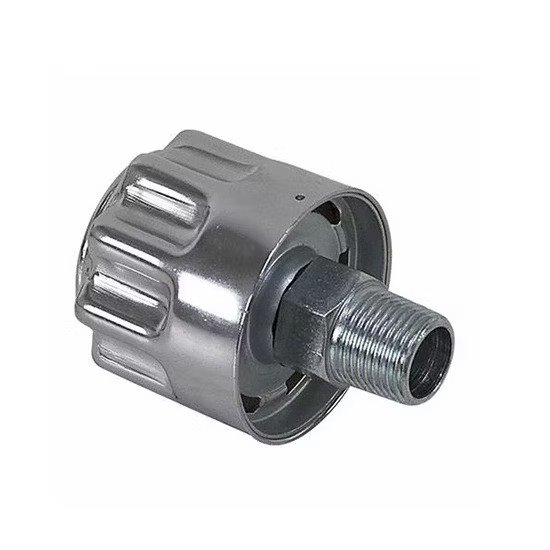
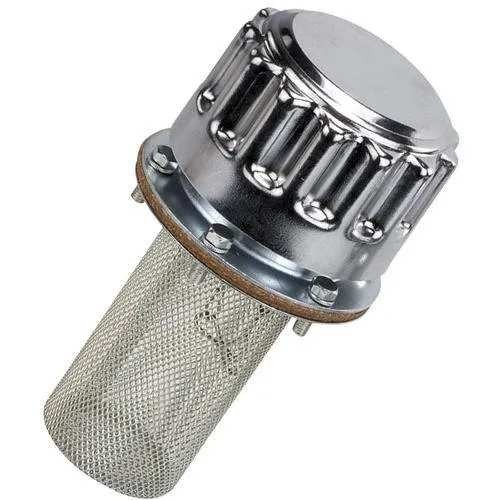
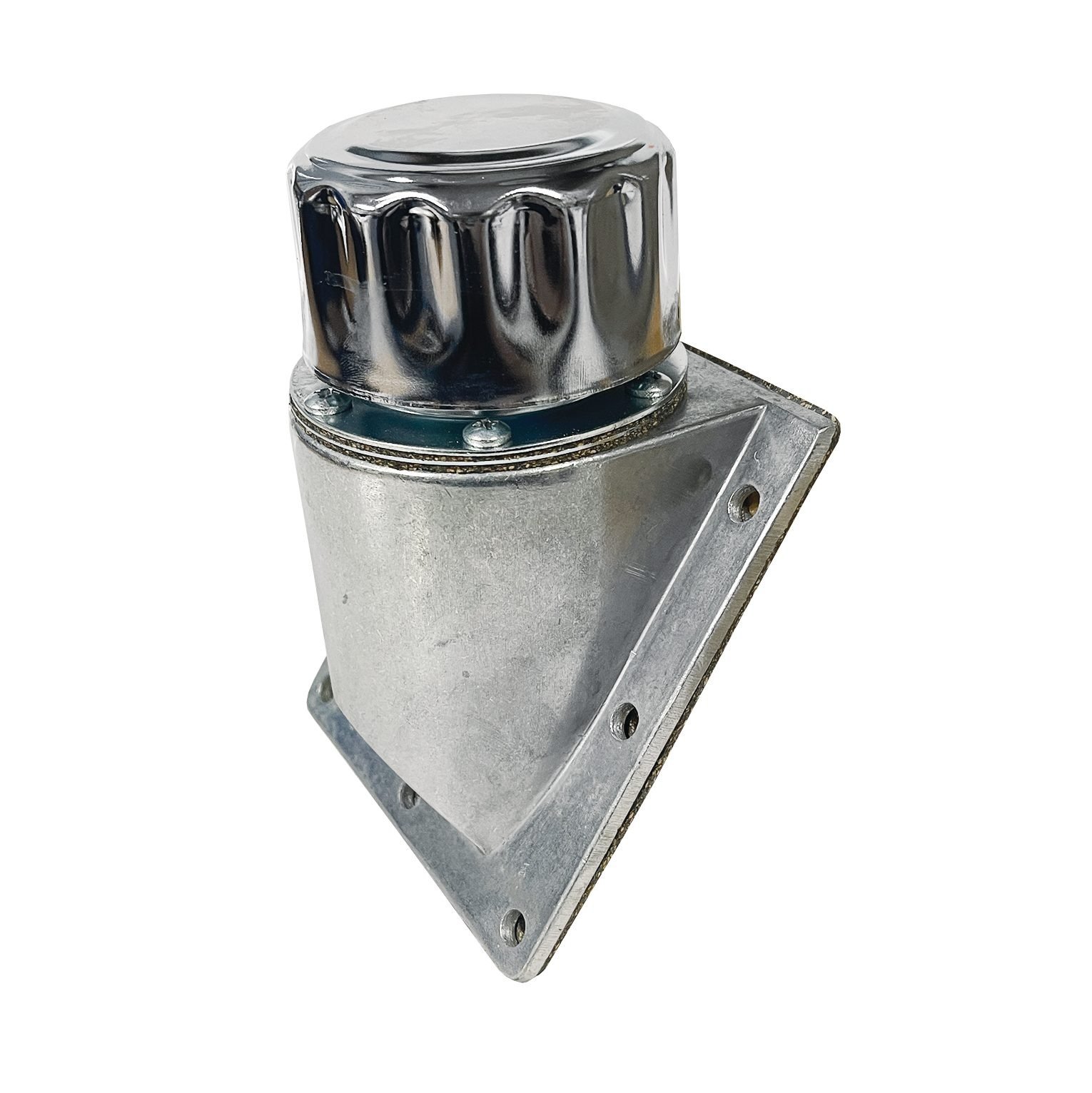
Filler Breathers serve a dual role in hydraulic systems, functioning as both a reservoir filling point and a breathing element that works alongside the hydraulic filter in India to prevent airborne contaminants from entering. They ensure continuous clean air exchange, maintaining overall system integrity and effectively protecting hydraulic fluid from dust, moisture, and debris.
Filler Breathers can be mounted on the top or side of the reservoir and come in various configurations, with or without strainers. Designed for easy filling, inspection, and maintenance, they work with the hydraulic filter to ensure effective system protection in both stationary and mobile hydraulic applications.
Technical Specification:
- Top Cap: Stainless Steel/Nylon
- Vents Underneath Hardware Includes: Gasket & Screws
- Metal Strainer: Standard
- Air Flow: TO 25 CFM
- Micron Rating: 40 Micron
Features
- Acts as both air breather and oil filling port
- Prevents contaminants and foreign particles from entering the system
- Available with integrated strainer for dual protection (40 Micron Element)
- Easy to install and service, suitable for tank top or side mounting
- Rugged metallic construction ensuring long service life
| Model | Micron Rating | Cap Diameter | Element Diameter |
Overall Height |
|---|---|---|---|---|
| UNI-FSB-05 | 40 | 46 | 28 | 117 |
| UNI-FSB-25 | 40 | 77 | 48 | 143 |
| Model | Micron Rating | Cap Diameter | Thread (inch) |
Overall Height |
|---|---|---|---|---|
| UNI-FSB-T-05 | 40 | 46 | 1-4 | 63 |
| UNI-FSB-T-05 | 40 | 46 | 3-8 | 63 |
| UNI-FSB-T-05 | 40 | 46 | 1-2 | 63 |
| UNI-FSB-T-25 | 40 | 76 | 3-4 | 72 |
| UNI-FSB-T-25 | 40 | 76 | 1 | 72 |
6) Diffuser
Description
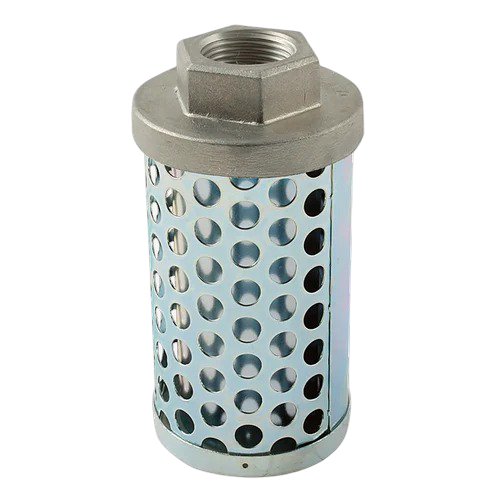
Return Line Diffusers are installed at the outlet of return line filters to ensure smooth, quiet oil entry into the hydraulic reservoir. They effectively reduce discharge velocity, turbulence, foaming, and aeration. Check our hydraulic filter price for reliable, cost-effective solutions.
Features
- Designed for return line applications.
- Two-stage diffusion to reduce discharge velocity.
- Minimizes turbulence, foaming, and aeration.
- Significantly reduces noise levels in the reservoir.
- Can eliminate the need for baffle plates.
- Must be installed below oil level for effective operation.
- Compact and robust construction for long service life.
- It must be bellow Oil Level.
Technical Specification:
- Top Cap: Aluminum Die Cast
- Bottom Cap: Steel Cap
- Support: Perforated Tube
- Suitable for: Hydraulic & Mineral oil
- Media: SS
- Temp. Rating: 100°C
- Micron Rating: 149 Micron
- Bonding: Epoxy
| Model lD | Flow (LPM) |
Thread (inch) |
Overall Length | Diameter Cap |
|---|---|---|---|---|
| UNI-RD-50 | 50 | 3-4 | 120 | 63 |
| UNI-RD-100 | 100 | 1 | 125 | 85 |
| UNI-RD-200 | 200 | 1-1/4 | 160 | 85 |
| UNI-RD-300 | 300 | 1-1/2 | 190 | 85 |
| UNI-RD-400 | 400 | 2 | 190 | 100 |
| UNI-RD-500 | 500 | 2-1/2 | 200 | 150 |
| UNI-RD-600 | 600 | 3 | 250 | 150 |