

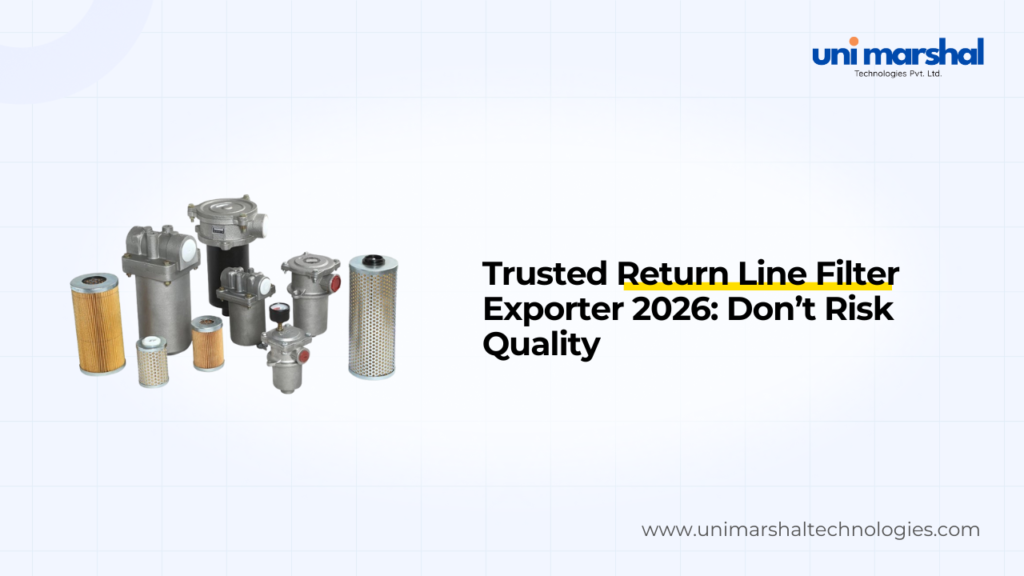
SECTION A : What Does a Return Line Filter Exporter Do in 2026?
Return line filter exporter plays a critical role in supplying filtration solutions to hydraulic system users across global markets in 2026. Their work goes far beyond shipping products from one country to another.
A return line filter exporter connects manufacturers with industries that depend on clean hydraulic oil for safe and efficient operations. These exporters focus on quality, compliance, and consistency.
In 2026, global buyers expect exporters to meet technical, regulatory, and performance standards without delays or quality risks.
Core Responsibilities of a Return Line Filter Exporter
A return line filter exporter handles multiple tasks that directly impact system reliability and buyer trust.
- Supplying filters that meet international hydraulic standards
- Ensuring consistent product quality across batches
- Managing export documentation and compliance
- Supporting buyers with technical clarity
- Coordinating safe packaging and logistics
Each responsibility supports smooth operations for global industries.
How Exporters Support Hydraulic System Performance
Return line filters protect hydraulic systems by removing contaminants before oil returns to the reservoir. Exporters ensure the right filter reaches the right application.
- Match filter micron ratings to system needs
- Provide material options like stainless steel housings
- Ensure flow rate compatibility
- Support long service life and durability
This reduces equipment wear and unexpected downtime.
Key Industries Served in 2026
Exporters supply return line filters to multiple sectors where hydraulic cleanliness is essential.
- Construction and earthmoving equipment
- Manufacturing and automation plants
- Mining and heavy engineering
- Marine and offshore systems
- Power generation and industrial processing
Each industry demands reliable filtration performance.
Quality and Compliance Expectations
In 2026, Return line filter exporters must meet strict buyer expectations to avoid rejection or system failure.
- Compliance with ISO and international norms
- Batch-level quality checks
- Material traceability
- Pressure and flow testing
These steps help buyers trust long-term supply.
Exporter vs Local Supplier: Quick Comparison
| Aspect | Exporter Focus | Local Supplier Focus |
| Market Reach | Global supply | Regional supply |
| Compliance | International standards | Local standards |
| Documentation | Export-ready | Limited |
| Packaging | Long-distance safe | Short-distance |
| Buyer Support | Global industries | Local users |
This table helps buyers understand the exporter’s role clearly.
What Buyers Expect From Exporters Today
Buyers searching for solutions want clarity, not complexity.
- Clear product specifications
- Honest lead times
- Stable pricing for bulk orders
- Technical guidance before purchase
- Consistent after-sales communication
Meeting these expectations builds long-term relationships.
Why Exporters Matter More in 2026
Global projects demand reliable filtration partners. A trusted exporter reduces risks linked to quality failure, shipment delays, and compliance issues.
Many buyers now prefer a return line filter exporter who understands both product performance and international trade requirements.
This makes exporters a key part of global hydraulic supply chains.
SECTION B : Why Choosing a Trusted Return Line Filter Exporter Is Critical
Return line filter exporter plays a vital role in ensuring hydraulic systems operate efficiently and safely. Selecting the right exporter prevents costly failures and operational delays.
A trusted return line filter exporter provides quality, compliance, and consistent supply to buyers worldwide. They are not just suppliers but partners in system reliability.
Key Reasons to Choose a Trusted Exporter
Selecting the wrong exporter can lead to quality issues and shipment delays. Here’s why trust matters:
- Guarantees filters meet international quality standards
- Reduces risk of contamination in hydraulic systems
- Ensures timely delivery for global projects
- Provides technical support for proper filter selection
- Maintains consistent product performance across orders
How Trusted Exporters Maintain Quality
A reliable exporter ensures that every filter meets strict testing and compliance requirements.
- ISO-certified manufacturing
- Material and micron rating verification
- Flow rate and pressure testing
- Durable and long-lasting filter design
- Traceable batch documentation
These practices ensure buyers receive filters that function perfectly in critical systems.
Exporter vs Unverified Supplier: Quick Comparison
| Aspect | Trusted Exporter | Unverified Supplier |
| Quality | ISO-certified & tested | Variable & risky |
| Compliance | Global standards | Often non-compliant |
| Delivery | On-time for exports | Delays common |
| Technical Support | Expert guidance | Limited support |
| Reliability | Consistent performance | Inconsistent results |
This table helps buyers quickly see why choosing a trusted exporter is critical.
Benefits of Working With a Trusted Exporter
Working with the right exporter provides tangible advantages for industrial buyers:
- Reduces hydraulic system wear and maintenance costs
- Prevents unexpected downtime due to contaminated oil
- Supports large-scale international orders without risk
- Offers clear specifications and batch traceability
- Provides long-term partnership for supply stability
Industries That Rely on Trusted Exporters
A trusted return line filter exporter serves industries where contamination can halt operations:
- Construction and heavy machinery
- Manufacturing and automation plants
- Mining and extraction projects
- Marine and offshore systems
- Power generation and industrial processing
Choosing the Right Exporter in 2026
In 2026, buyers prefer exporters who offer:
- Transparent quality standards
- Clear lead times and bulk order support
- Technical guidance on hydraulic compatibility
- Compliance with global export regulations
- Proven reliability across multiple projects
Selecting a trusted return line filter exporter ensures global buyers get filters that protect their equipment and guarantee uninterrupted operations.
SECTION C : Common Quality Risks When Buying from an Unverified Exporter
Return line filter exporter selection is critical because choosing an unverified supplier can lead to serious issues. Many buyers overlook risks until problems affect hydraulic systems.
Unverified exporters often fail to meet global standards, causing equipment damage, operational delays, and financial loss. Understanding common risks helps buyers make informed decisions.
Key Quality Risks from Unverified Exporters
When filters are not properly tested or certified, buyers face multiple problems:
- Inconsistent micron ratings causing improper filtration
- Contaminated or substandard materials
- Poor flow rate and pressure handling
- Shorter service life and frequent replacements
- Lack of technical guidance or batch traceability
These risks directly impact hydraulic system performance.
How Poor Quality Impacts Operations
Buyers experience significant consequences when filters fail in critical systems:
- Increased wear on hydraulic pumps and valves
- Higher maintenance and replacement costs
- Unexpected downtime affecting production schedules
- Risk of oil contamination damaging machinery
Unverified vs Verified Exporter Comparison
| Aspect | Unverified Exporter | Verified Exporter |
| Product Quality | Variable, risky | ISO-certified, tested |
| Compliance | Often missing | Meets global standards |
| Lead Times | Unreliable | Timely delivery |
| Technical Support | Limited | Expert guidance available |
| Traceability | Rarely provided | Full batch tracking |
This table helps buyers quickly see why verification matters.
Signs of Potential Return Line Filter Quality Issues
Knowing what to check prevents selecting low-quality exporters:
- Missing certifications or test reports
- Inconsistent product specifications
- No documentation for material or batch
- Unclear shipping and packaging standards
- Limited communication on technical aspects
Industries Most Affected
Certain sectors are highly sensitive to filtration issues:
- Manufacturing and automation plants
- Construction and heavy machinery
- Mining and mineral extraction
- Marine and offshore systems
- Power generation and industrial processing
How Buyers Can Mitigate Risks
Even without prior experience, buyers can reduce exposure:
- Request ISO and international compliance certificates
- Verify micron ratings and material specifications
- Ask for test reports and batch documentation
- Work with exporters who provide technical guidance
- Prefer long-term trusted partners with proven track records
Choosing a return line filter exporter carefully ensures buyers avoid return line filter quality issues and protect critical hydraulic systems.

SECTION D : Key Certifications Global Buyers Expect from Exporters
Return line filter exporter credibility is measured by certifications that prove quality, safety, and compliance. Global buyers rely on these standards to make informed purchasing decisions.
Certified exporters demonstrate commitment to performance, reliability, and international standards. Buyers now prefer working with a certified return line filter exporter to avoid system failures and quality risks.
Essential Certifications for Exporters
Global buyers look for key certifications that ensure filters meet international standards:
- ISO 9001: Quality management system certification
- ISO 14001: Environmental management compliance
- ISO 2941: Hydraulic filter strength validation
- ISO 16889: Multi-pass efficiency testing
- CE Marking: European safety and performance compliance
These certifications prove that filters are safe, reliable, and suitable for critical hydraulic systems.
Why Certifications Matter
Certifications protect buyers by guaranteeing:
- Consistent product quality across batches
- Proper micron rating and filtration efficiency
- Material traceability and durability
- Compliance with international trade regulations
- Reduced operational risk and maintenance costs
Certification Checklist: Quick View
| Certification | Purpose | Buyer Benefit |
| ISO 9001 | Quality management | Consistent filter performance |
| ISO 14001 | Environmental compliance | Eco-friendly manufacturing |
| ISO 2941 | Strength & endurance | Long-lasting filter housing |
| ISO 16889 | Filtration efficiency | Protects hydraulic systems |
| CE Marking | Safety & compliance | Meets global regulatory standards |
This table makes it easy for buyers to understand what certifications to expect.
How Buyers Verify Certifications
Before placing orders, buyers often check:
- Official certificate copies from the exporter
- Test reports for micron ratings and flow rates
- Batch traceability documentation
- Compliance with local and international norms
- Export-ready packaging and labeling
Industries That Value Certified Exporters
Certain industries depend heavily on certified filters:
- Manufacturing and industrial automation
- Construction and earthmoving equipment
- Mining and heavy engineering
- Marine and offshore systems
- Power generation and processing plants
Benefits of Working with Certified Exporters
Certified exporters ensure buyers receive reliable, high-quality filters:
- Reduced system downtime and equipment damage
- Predictable maintenance schedules
- Trust in long-term supplier relationships
- Simplified compliance for international projects
- Assurance of consistent product performance
Global buyers prioritize a return line filter exporter with verified certifications to protect equipment, maintain operations, and meet international quality standards.
SECTION E : Return Line Filter Export Standards for Global Markets
Return line filter exporter must adhere to strict standards to ensure hydraulic systems perform safely and efficiently across international markets. Global buyers rely on these standards to maintain system reliability.
Following proper return line filter exporter standards guarantees that products meet quality, safety, and compliance requirements. Buyers expect filters to work under high pressure and harsh operating conditions without failure.
Key Global Export Standards
To meet international expectations, exporters focus on several critical standards:
- ISO 2941: Validates filter element strength under pressure
- ISO 16889: Ensures multi-pass filtration efficiency
- ISO 9001: Quality management system for consistent performance
- ISO 14001: Environmental compliance during manufacturing
- CE Certification: Confirms safety and regulatory compliance for Europe
These standards provide buyers confidence in filter reliability and operational safety.
Importance of Export Standards
Meeting export standards helps prevent:
- Equipment damage due to poor filtration
- Contamination risks in hydraulic systems
- Operational delays caused by filter failure
- Non-compliance with international trade regulations
- Frequent replacements and maintenance costs
Global Export Standards: Quick Reference Table
| Standard | Purpose | Benefit for Buyers |
| ISO 2941 | Filter element strength | Safe for high-pressure systems |
| ISO 16889 | Multi-pass efficiency | Protects hydraulic components |
| ISO 9001 | Quality management | Consistent filter performance |
| ISO 14001 | Environmental compliance | Eco-friendly production |
| CE Certification | Safety & compliance | Meets European regulations |
This table helps buyers quickly identify what standards a reliable exporter follows.
How Exporters Implement Standards
- Conduct pressure and flow testing on each filter
- Verify micron ratings and material specifications
- Maintain batch traceability for all shipments
- Ensure packaging protects filters during long-distance transport
- Provide compliance documentation for customs and buyers
Industries Requiring Standard-Compliant Filters
Certain sectors depend heavily on filters that meet global standards:
- Construction machinery and earthmoving equipment
- Manufacturing and industrial automation
- Mining and heavy engineering
- Marine and offshore operations
- Power generation and processing plants
Benefits for Buyers
Working with exporters following these standards ensures:
- Reduced hydraulic system wear and maintenance
- Reliable long-term equipment performance
- Compliance with international regulations
- Safe and consistent supply for global projects
- Minimized risk of operational downtime
Global buyers trust a return line filter exporter who strictly follows return line filter export standards to ensure safety, efficiency, and regulatory compliance.
SECTION F : How Indian Return Line Filter Exporters Serve Global Industries
Return line filter exporter from India has become a trusted partner for global industries, providing high-quality filters, timely delivery, and compliance with international standards.
Indian exporters are known for combining technical expertise with cost-effective solutions. Their filters are widely used in critical hydraulic systems worldwide, ensuring safety and efficiency.
Key Services Provided by Indian Exporters
- Supply filters that meet ISO and global standards
- Offer stainless steel and high-durability filter materials
- Ensure micron ratings suitable for diverse hydraulic systems
- Provide batch traceability and quality documentation
- Deliver filters on time for large-scale international projects
These services make Indian exporters reliable for overseas buyers.
How Indian Exporters Maintain Global Standards
- Conduct stringent testing for flow rate and pressure
- Verify material quality and micron ratings
- Maintain ISO certifications and compliance
- Use secure packaging to protect filters during transit
- Provide technical guidance for proper filter installation
Industries Served by Indian Exporters
Indian return line filter exporters cater to industries that require high reliability:
- Construction and heavy machinery
- Manufacturing and automation plants
- Mining and mineral extraction
- Marine and offshore applications
- Power generation and processing industries
Benefits of Choosing Indian Exporters
- Competitive pricing without compromising quality
- Efficient international shipping and logistics
- Access to technical expertise and after-sales support
- Consistent supply for global projects
- Reduced risk of hydraulic system failure
Indian Exporters vs Local Suppliers: Quick Comparison
| Aspect | Indian Exporter | Local Supplier |
| Quality | ISO-certified & tested | Variable quality |
| Compliance | Global export standards | Limited standards |
| Delivery | Timely for overseas projects | Regional focus |
| Technical Support | Expert guidance | Minimal support |
| Pricing | Cost-effective | Often higher for global supply |
This table highlights why international buyers prefer Indian exporters.
How Buyers Can Choose the Right Exporter
- Verify certifications like ISO and CE marking
- Check previous international shipments
- Ensure availability of batch documentation
- Confirm micron ratings and filter materials
- Request technical guidance on system compatibility
Indian companies acting as a return line filter exporter India have strengthened their position in global markets by combining quality, reliability, and international compliance.

SECTION G : Material, Micron Rating, and Performance Factors to Check
Return line filter exporter ensures hydraulic systems run efficiently by providing filters that meet material, micron, and performance standards. Buyers must verify these factors for reliable operation.
Indian exporters are well-known for delivering filters that combine durability, precision, and compliance, making them a preferred return line filter exporter India for global industries.
Key Material Considerations
- Stainless steel housing for durability
- High-grade synthetic or cellulose filter media
- Corrosion-resistant components for long-term use
- Materials tested for hydraulic oil compatibility
- Heat and pressure-resistant construction
Correct materials ensure filters withstand harsh industrial conditions and maintain efficiency.
Understanding Micron Ratings
Micron rating determines how effectively a filter removes contaminants:
- Low micron rating = finer filtration
- High micron rating = suitable for less critical applications
- Must match hydraulic system requirements
- Impacts oil cleanliness and equipment longevity
- Influences maintenance frequency and system reliability
Performance Factors to Check
Reliable performance prevents system failures and downtime. Buyers should consider:
- Flow rate compatibility with hydraulic circuits
- Pressure drop across the filter element
- Multi-pass efficiency for contaminant removal
- Service life and maintenance interval
- Resistance to clogging and system wear
Quick Reference Table: Material, Micron, and Performance
| Factor | What to Check | Buyer Benefit |
| Material | Housing & filter media quality | Long-lasting, durable filters |
| Micron Rating | Correct size for application | Optimal contaminant removal |
| Flow Rate | System compatibility | Smooth hydraulic operation |
| Pressure Drop | Low resistance | Efficient energy use |
| Service Life | Maintenance intervals | Reduced downtime and cost |
This table helps buyers quickly assess critical filter specifications.
Why Verification Matters
- Ensures filters meet international standards
- Protects pumps, valves, and hydraulic components
- Reduces oil contamination and system failures
- Maintains equipment performance over time
- Builds trust with global suppliers and partners
Industries Where These Factors Are Critical
- Construction and heavy machinery
- Manufacturing and automation
- Mining and extraction equipment
- Marine and offshore systems
- Power generation and industrial plants
Verifying material, micron rating, and performance factors with a reliable return line filter exporter ensures hydraulic systems operate efficiently, safely, and reliably across global industries.
SECTION H : How to Verify Quality Before Placing an Export Order
Return line filter exporter must provide reliable and high-quality filters to ensure hydraulic systems work efficiently. Verifying quality before placing an order prevents costly mistakes.
Global buyers need to confirm that filters meet technical standards and operational requirements. Proper return line filter quality testing ensures each filter functions as expected.
Steps to Verify Quality
- Request ISO and international certifications
- Check material quality and filter housing durability
- Verify micron rating and filtration efficiency
- Ask for batch-level testing reports
- Confirm flow rate and pressure drop compatibility
These steps give buyers confidence in filter performance and safety.
Key Points for Buyers
- Ensure compliance with export standards
- Review technical specifications carefully
- Inspect packaging and shipping methods
- Confirm after-sales support availability
- Compare multiple exporters before final selection
Following these points reduces the risk of receiving substandard filters.
Quality Verification Checklist
| Checkpoint | What to Verify | Buyer Benefit | |
| Certification | ISO, CE, and global compliance | Assures international standard adherence | |
| Material | Housing & filter media | Durable, long-lasting filters | |
| Micron Rating | Correct rating for system | Efficient contaminant removal | |
| Flow & Pressure | System compatibility | Smooth hydraulic operation | |
| Test Reports | Batch-level testing | Confidence in filter reliability |
This table simplifies the verification process for buyers.
How Exporters Support Verification
- Provide detailed technical datasheets
- Share filter performance test results
- Demonstrate compliance with hydraulic system requirements
- Offer guidance on correct filter selection
- Ensure traceable batch documentation
Industries Where Verification Is Critical
- Manufacturing and automation plants
- Construction and heavy machinery
- Mining and extraction equipment
- Marine and offshore systems
- Power generation and industrial plants
Verifying quality with a reliable return line filter exporter ensures buyers receive filters that meet global standards, protect hydraulic systems, and reduce operational risks.
SECTION I : Questions Global Buyers Ask Before Choosing an Exporter
Return line filter exporter selection is crucial for global buyers. Asking the right questions ensures the filters meet quality, compliance, and operational standards for hydraulic systems.
Buyers often rely on return line filter exporter FAQs to evaluate suppliers before placing orders. Clear answers reduce risk and ensure reliable supply.
Key Questions Buyers Typically Ask
- Does the exporter hold ISO or international certifications?
- Are micron ratings and material specifications verified?
- Can they provide batch-level test reports?
- What is the typical lead time for international shipments?
- Do they provide technical guidance for proper filter selection?
These questions help buyers make informed decisions quickly.
Verification Focus Areas
- Certifications: ISO, CE, and global compliance
- Filter Performance: Flow rate, pressure drop, efficiency
- Material Quality: Housing and filter media durability
- Packaging & Shipping: Safe long-distance transport
- After-Sales Support: Technical guidance and issue resolution
Quick Comparison Table: Buyer Questions vs Exporter Responses
| Buyer Concern | What to Ask | Expected Exporter Response |
| Certifications | ISO, CE, other standards | Verified certificates provided |
| Filter Specifications | Micron, material | Accurate datasheets shared |
| Testing | Performance & batch | Test reports available |
| Delivery | Lead times | On-time international shipment |
| Support | Technical assistance | Expert guidance offered |
This table helps buyers quickly understand what to check before selecting an exporter.
Additional Questions Buyers Consider
- Are filters suitable for specific hydraulic systems?
- How consistent is product quality across batches?
- What is the maintenance interval for filters?
- Can the exporter handle large or repeated orders?
- Do they follow environmental and safety compliance?
Industries That Rely on Verified Exporters
- Construction and heavy machinery
- Manufacturing and automation plants
- Mining and extraction industries
- Marine and offshore applications
- Power generation and industrial plants
Global buyers rely on a return line filter exporter who can confidently answer FAQs, ensuring safe, efficient, and compliant filter supply for critical hydraulic systems.
FREQUENTLY ASKED QUESTIONS:
Other Industry Topics Are Exploring
Return Line Filter || Hydraulic Filters || Industrial Filters || Return line Filter Supplier || Hydraulic System || Global Export || Industrial Equipment || ISO Certified Filters || Heavy Machinery || Hydraulic Filter Types || Industrial Supply || Hydraulic Filtration || Engineering Solutions || Hydraulic Oil Protection || Quality Filters ||