

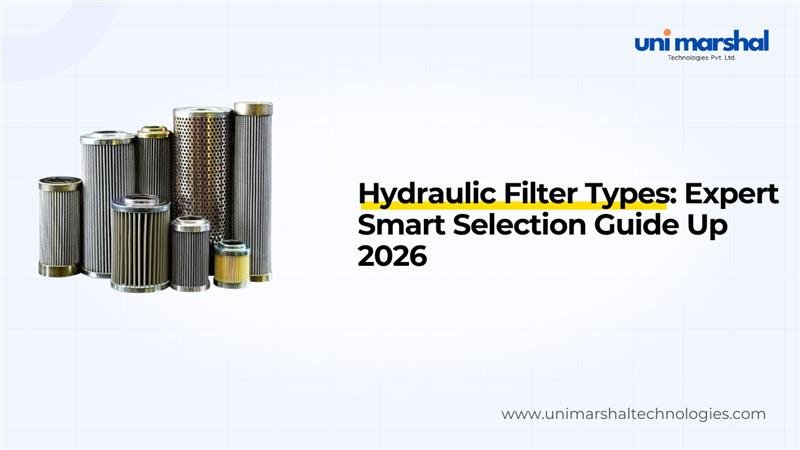
SECTION A: What Are Hydraulic Filters and Why Are They Used in Industrial Systems?
Hydraulic filter types play a critical role in keeping industrial machines reliable, safe, and efficient. They protect hydraulic systems from damage caused by contamination in hydraulic oil.
Hydraulic systems depend on clean oil to transmit power smoothly. Even small particles can lead to wear, leakage, or system failure if not controlled properly.
What Is a Hydraulic Filter?
A hydraulic filter is a device designed to remove unwanted particles from hydraulic fluid before they circulate through the system.
These particles may include:
- Dust and dirt
- Metal wear debris
- Rubber or seal fragments
- Sludge and oxidation residue
Clean oil ensures smooth operation and consistent performance.
Why Hydraulic Filters Are Essential in Industrial Systems
Industrial machines operate under high pressure and continuous load. Contaminated oil directly affects system health.
Hydraulic filters help industries by:
- Preventing internal component wear
- Maintaining oil cleanliness levels
- Ensuring smooth fluid flow
- Supporting long equipment life
This explains the true hydraulic filter purpose in demanding industrial environments.
How Contamination Enters Hydraulic Systems
Contamination can enter a hydraulic system at different stages.
Common sources include:
- New oil that is not fully clean
- Wear and tear of internal components
- Improper maintenance practices
- External dust during servicing
Once inside, contamination spreads quickly.
What Happens Without Proper Filtration?
Poor filtration can silently damage machinery over time.
Common issues include:
- Reduced machine efficiency
- Increased operating temperature
- Frequent breakdowns
- Unexpected downtime
- Higher maintenance costs
These problems often appear when it is already too late.
Where Hydraulic Filters Are Used in Industry
Hydraulic filtration is essential across many sectors.
Common applications include:
- Manufacturing plants
- Construction equipment
- Mining machinery
- Power generation systems
- Material handling equipment
Every application demands clean and stable hydraulic oil.
Key Benefits of Using Hydraulic Filters
Hydraulic filters provide both technical and business advantages.
Main benefits:
- Protects pumps, valves, and actuators
- Maintains consistent system pressure
- Improves machine reliability
- Reduces oil replacement frequency
- Lowers long-term operating costs
Understanding Hydraulic Filter Types at a Glance
The table below helps users quickly understand where different filters are used and what they do.
| Filter Location | Primary Function | What It Protects |
| Suction Line Filter | Blocks large particles before pump intake | Hydraulic pump |
| Pressure Line Filter | Removes fine contaminants under pressure | Valves and actuators |
| Return Line Filter | Cleans oil before it re-enters the tank | Entire system |
| Offline Filter | Continuously cleans oil independently | Oil quality and lifespan |
This structure helps users visually grasp how filtration works.
Why Choosing the Right Filter Matters
Using the wrong filter can reduce system performance.
Correct selection ensures:
- Proper oil cleanliness
- Balanced pressure flow
- Longer component life
- Stable machine operation
This is why understanding hydraulic filter types is essential for industrial users.
SECTION B: What Are the Main Types of Hydraulic Filters?
Hydraulic filter types are essential components in any industrial hydraulic system. They ensure clean oil flow and protect machinery from contamination that can cause wear or failure.
Hydraulic filters remove dirt, debris, and metal particles from hydraulic oil. This keeps the system running smoothly and extends the life of components.
Understanding the Key Hydraulic Filter Types
Hydraulic filters vary based on location, pressure, and particle removal efficiency. Each type is designed to protect specific parts of the system.
Suction Line Filters
- Positioned before the pump
- Prevents large debris from entering the pump
- Protects pumps from early damage
- Maintains smooth oil flow
Pressure Line Filters
- Installed after the pump under high pressure
- Removes fine contaminants from hydraulic oil
- Protects valves, cylinders, and actuators
- Maintains consistent system performance
Return Line Filters
- Located before oil returns to the reservoir
- Cleans oil after it circulates through the system
- Protects the entire hydraulic circuit
- Reduces wear on components
Offline Filters (Kidney Loop Filters)
- Operates independently of main system flow
- Continuously cleans hydraulic oil
- Extends oil life and system reliability
- Ideal for high-performance machinery
Magnetic Filters
- Attracts and removes metallic particles
- Protects sensitive components
- Often combined with other filter types
- Works efficiently for steel-contaminated systems
Quick Comparison of Hydraulic Filter Types
| Filter Type | Location | Primary Function | Key Benefits |
| Suction Line | Before Pump | Blocks large debris | Pump protection, smooth flow |
| Pressure Line | After Pump | Removes fine particles | Protects valves & actuators |
| Return Line | Before Reservoir | Cleans circulated oil | Full system protection |
| Offline Filter | Separate Loop | Continuous oil cleaning | Extended oil life |
| Magnetic Filter | Anywhere in System | Attracts metallic debris | Protects sensitive parts |
Why Knowing Hydraulic Filter Types Is Important
Understanding types of hydraulic filters helps in selecting the right one for your system. Correct choice improves efficiency, reduces maintenance, and prevents unexpected breakdowns.
SECTION C: What Is a Suction Line Hydraulic Filter and When Should You Use It?
Hydraulic filter types include several key options, and the suction line hydraulic filter is one of the most critical. It protects pumps by filtering oil before it enters the system.
Suction line filters prevent large contaminants from damaging sensitive components. They are installed at the pump inlet to ensure clean oil flow.
What Is a Suction Line Hydraulic Filter?
A suction line hydraulic filter is designed to remove large particles from hydraulic oil before it reaches the pump. This prevents early wear and tear on the system.
Key features:
- Positioned before the pump
- Removes large debris
- Maintains smooth oil flow
- Protects pump components
Why Use a Suction Line Hydraulic Filter?
Suction line filters are essential for systems that handle contaminated or old hydraulic oil. They help:
- Prevent pump cavitation
- Reduce mechanical wear
- Improve system reliability
- Extend component life
When Should You Use a Suction Line Filter?
- In dusty or harsh environments
- When using recycled or less-clean hydraulic oil
- For high-pressure systems with sensitive pumps
- During initial startup of new machinery
Benefits of Using a Suction Line Hydraulic Filter
- Protects hydraulic pumps from damage
- Maintains steady oil flow
- Reduces downtime and maintenance
- Enhances overall system efficiency
Suction Line Filter Overview
| Feature | Description | Benefit |
| Location | Pump inlet | Blocks large debris before pump |
| Filtration Level | Coarse (large particles) | Prevents pump cavitation |
| Main Use | All industrial hydraulic systems | Protects pumps & major components |
| Maintenance | Easy to clean or replace | Reduces downtime |
How It Fits in Hydraulic Filter Types
The suction line filter is the first line of defense in hydraulic filter types. Selecting the right suction line hydraulic filter ensures smooth operation and long-lasting machinery.

SECTION D: What Is a Pressure Line Hydraulic Filter and Why Is It Important?
Hydraulic filter types include pressure line filters, which play a crucial role in protecting valves, actuators, and other critical components in a hydraulic system.
A pressure line hydraulic filter removes fine contaminants from oil after it leaves the pump, ensuring clean fluid reaches sensitive system parts.
What Is a Pressure Line Hydraulic Filter?
A pressure line hydraulic filter is installed downstream of the pump. It filters high-pressure oil to protect the system from damage caused by tiny particles.
Key points:
- Positioned after the pump
- Handles high-pressure oil
- Removes fine contaminants
- Protects valves, cylinders, and actuators
Why Is It Important?
Pressure line filters are critical because even small contaminants can cause severe wear or system failure.
Benefits include:
- Prevents valve clogging
- Reduces actuator damage
- Maintains consistent hydraulic pressure
- Enhances system efficiency and reliability
When to Use a Pressure Line Hydraulic Filter
- In systems with high-pressure pumps
- When oil cleanliness is crucial for performance
- In machinery with sensitive valves and actuators
- For equipment operating continuously under load
Advantages of Pressure Line Hydraulic Filters
- Protects essential components from fine particles
- Minimizes unexpected downtime
- Ensures smooth operation under high pressure
- Extends service life of hydraulic machinery
Pressure Line Filter Overview
| Feature | Description | Benefit |
| Location | After pump | Filters high-pressure oil |
| Filtration Level | Fine particles | Protects valves & actuators |
| Main Use | High-pressure hydraulic systems | Maintains system efficiency |
| Maintenance | Regular inspection & replacement | Reduces wear & downtime |
How It Fits in Hydraulic Filter Types
Pressure line filters are a vital part of hydraulic filter types, providing the second layer of protection in a system. Choosing the right pressure line hydraulic filter ensures long-lasting machinery and reliable performance.
SECTION E: What Is a Return Line Hydraulic Filter and How Does It Protect the System?
Hydraulic filter types include return line hydraulic filters, which are crucial for maintaining clean oil before it re-enters the reservoir. They ensure system longevity and smooth operation.
Return line filters remove contaminants that accumulate during operation, protecting the system and preventing damage to pumps, valves, and actuators.
What Is a Return Line Hydraulic Filter?
A return line hydraulic filter is installed before the hydraulic tank to clean oil returning from the system. It captures small and medium particles missed by other filters.
Key points:
- Positioned before the reservoir
- Cleans oil returning from the system
- Removes fine and medium particles
- Protects entire hydraulic circuit
Why Is It Important?
Return line filters are essential because they maintain overall system cleanliness, extending component life and improving efficiency.
Main benefits:
- Reduces wear on pumps and valves
- Prevents contamination buildup in the tank
- Maintains consistent system performance
- Supports long-term reliability
When to Use a Return Line Hydraulic Filter
- In all industrial hydraulic systems
- When system operates continuously under load
- In machinery handling large volumes of oil
- To protect pumps, valves, and actuators
Advantages of Return Line Hydraulic Filters
- Captures contaminants missed by suction or pressure filters
- Maintains high oil cleanliness standards
- Reduces downtime and maintenance costs
- Enhances system efficiency and lifespan
Return Line Filter Overview
| Feature | Description | Benefit |
| Location | Before reservoir | Cleans returning oil |
| Filtration Level | Fine & medium particles | Protects pumps, valves, actuators |
| Main Use | Industrial hydraulic systems | Maintains system efficiency |
| Maintenance | Regular cleaning or replacement | Reduces wear & downtime |
How It Fits in Hydraulic Filter Types
The return line filter is a critical component among hydraulic filter types. Using the correct return line hydraulic filter ensures clean oil circulation and long-lasting machinery performance.
SECTION F: How to Choose the Right Hydraulic Filter Type for Your Application
Hydraulic filter types vary based on system requirements, pressure levels, and contamination risks. Choosing the right one ensures machinery reliability, efficiency, and long-term protection.
Selecting the correct filter prevents system failures and reduces maintenance costs while maintaining smooth operation.
Factors to Consider When Choosing a Hydraulic Filter
- System Pressure: Higher pressure systems need filters rated for extreme conditions
- Flow Rate: Ensure the filter handles the oil volume without restricting flow
- Oil Cleanliness Requirement: Critical machinery requires finer filtration
- Operating Environment: Dusty or harsh environments may need extra protection
- Pump and Component Sensitivity: Sensitive components require precise filtration
Common Hydraulic Filter Types
Understanding different filter types helps make informed choices.
- Suction Line Filters: Protect the pump by removing large debris
- Pressure Line Filters: Remove fine particles after the pump
- Return Line Filters: Clean oil before it returns to the reservoir
- Offline/Kidney Loop Filters: Continuous filtration independent of system flow
- Magnetic Filters: Remove metallic particles efficiently
How to Match Filters to Applications
- Identify critical components needing protection
- Check hydraulic system pressure and flow requirements
- Determine particle size contamination limits
- Consider operating environment and maintenance schedule
- Refer to manufacturer specifications for optimal filter selection
Hydraulic Filter Selection Guide
| Filter Type | Best For | Key Benefit | Typical Use |
| Suction Line | Pump protection | Blocks large debris | All industrial machinery |
| Pressure Line | Sensitive valves & actuators | Fine particle removal | High-pressure systems |
| Return Line | Full system protection | Cleans circulated oil | Continuous operation machines |
| Offline Filter | Oil longevity | Continuous independent filtration | High-demand machinery |
| Magnetic Filter | Metallic debris | Protects sensitive parts | Systems with metal contamination |
Tips for Proper Filter Selection
- Always consider oil type and viscosity
- Factor in environmental conditions and dust levels
- Regularly monitor filter performance
- Replace filters as per maintenance guidelines
- Use this hydraulic filter selection guide to ensure correct choice

SECTION G: Hydraulic Filter Micron Ratings Explained for Industrial Use
Hydraulic filter types depend on the micron rating to determine which particles they can remove from hydraulic oil. Understanding this ensures proper system protection and efficiency.
Micron ratings define the size of particles a filter can trap. Selecting the correct rating prevents component wear and contamination-related failures.
What Is a Hydraulic Filter Micron Rating?
A hydraulic filter micron rating measures the filter’s ability to remove particles of a certain size from hydraulic oil. Smaller micron numbers capture finer particles.
Key points:
- Measured in micrometers (µm)
- Lower micron = finer filtration
- Higher micron = coarser filtration
- Critical for system cleanliness
Why Micron Ratings Matter in Industrial Systems
- Protects pumps, valves, and actuators
- Reduces machine wear and downtime
- Maintains consistent hydraulic pressure
- Extends oil life and equipment longevity
How to Choose the Right Micron Rating
- Check system manufacturer recommendations
- Consider component sensitivity
- Analyze contamination levels in the oil
- Match rating with hydraulic system pressure and flow
- Adjust for operating environment (dusty or clean conditions)
Common Micron Ratings and Applications
- 10–25 µm: Suction line filters, coarse debris removal
- 5–10 µm: Pressure line filters, protects valves and actuators
- 3–5 µm: Return line filters, cleans oil before tank
- 1–3 µm: Offline or high-precision filters, maximum cleanliness
Hydraulic Filter Micron Ratings Overview
| Micron Rating | Typical Filter Type | Purpose | Protection Level |
| 10–25 µm | Suction Line | Remove large particles | Pump protection |
| 5–10 µm | Pressure Line | Remove fine particles | Valves & actuators |
| 3–5 µm | Return Line | Clean oil before tank | Full system protection |
| 1–3 µm | Offline/Precision | Continuous fine filtration | Maximum cleanliness |
Tips for Industrial Use
- Regularly inspect filter performance
- Replace filters based on contamination levels
- Maintain proper oil cleanliness
- Match hydraulic filter types with correct micron rating
- Use visual indicators if available for maintenance
SECTION H: What Happens If You Use the Wrong Hydraulic Filter Type?
Hydraulic filter types are designed for specific functions in a hydraulic system. Using the wrong type can lead to contamination, reduced efficiency, and costly equipment damage.
Incorrect filter selection often causes hydraulic filter failure, which can compromise pumps, valves, and actuators, leading to frequent breakdowns and system downtime.
Common Consequences of Using the Wrong Filter
- Reduced system efficiency due to blocked or unrestricted flow
- Accelerated wear of pumps, cylinders, and valves
- Increased maintenance costs and unscheduled downtime
- Contamination buildup affecting oil quality
How Wrong Filter Usage Affects Components
- Pumps: Cavitation or mechanical wear
- Valves: Sticking or leakage
- Actuators: Reduced performance or failure
- Hydraulic oil: Contaminated oil circulation
Signs Your System Has the Wrong Filter
- Unusual noises in the hydraulic pump
- Frequent pressure drops or fluctuations
- Visible contamination in hydraulic oil
- Increased system overheating
- Rapid wear on critical components
Effects of Using Wrong Hydraulic Filter Types
| Component | Issue Caused | Result |
| Pump | Cavitation or wear | Reduced efficiency, early failure |
| Valve | Sticking or leakage | Poor control and system errors |
| Actuator | Reduced movement | Loss of machine performance |
| Oil | Contamination accumulation | Shorter oil life, more maintenance |
How to Avoid Hydraulic Filter Failure
- Choose the correct filter for the system type
- Match filter micron rating with application needs
- Consider suction, pressure, return line, and offline filter placement
- Regularly inspect and replace filters as required
- Follow manufacturer recommendations for filter selection
SECTION I: How Often Should Hydraulic Filters Be Replaced?
Hydraulic filter types need timely replacement to keep hydraulic systems running efficiently. Regular maintenance prevents contamination, reduces wear, and extends machinery life.
The hydraulic filter replacement interval depends on system usage, oil cleanliness, and operating conditions. Proper scheduling ensures smooth performance and avoids costly downtime.
Factors Influencing Filter Replacement
- System operating hours and workload
- Type of hydraulic filter used (suction, pressure, return line, offline)
- Oil contamination level and quality
- Environmental conditions (dust, temperature, moisture)
- Manufacturer recommendations
Signs a Hydraulic Filter Needs Replacement
- Drop in hydraulic pressure
- Unusual noises from pumps or valves
- Visible dirt or metal particles in oil
- Frequent system errors or actuator lag
- Increased operating temperature
Recommended Replacement Intervals
- Suction Line Filters: Every 500–1000 hours or as needed
- Pressure Line Filters: Every 1000–2000 hours depending on contamination
- Return Line Filters: Every 1500–2500 hours for high-use systems
- Offline/Kidney Loop Filters: Monitored continuously; replace when dirty
Hydraulic Filter Replacement Overview
| Filter Type | Typical Replacement Interval | Key Maintenance Tip | Benefit |
| Suction Line | 500–1000 hours | Inspect for debris | Protects pump |
| Pressure Line | 1000–2000 hours | Check pressure drop | Protects valves & actuators |
| Return Line | 1500–2500 hours | Monitor oil cleanliness | Full system protection |
| Offline Filter | Continuous monitoring | Replace when filter is full | Maintains oil quality |
Tips for Effective Filter Maintenance
- Track operating hours and filter usage
- Use visual indicators or gauges if available
- Maintain logs for scheduled replacement
- Match hydraulic filter types with correct interval
- Clean or replace filters before efficiency drops
SECTION J: Why High-Quality Hydraulic Filters Matter in Heavy Industrial Equipment
Hydraulic filter types play a vital role in protecting heavy industrial equipment. High-quality filters ensure clean oil, reduce wear, and maintain consistent machine performance.
Industrial systems operate under high pressure and continuous loads. Using low-quality filters can lead to contamination, reduced efficiency, and unexpected breakdowns.
Importance of High-Quality Hydraulic Filters
- Protects pumps, valves, and actuators from particle damage
- Maintains oil cleanliness and viscosity
- Reduces maintenance frequency and downtime
- Improves overall equipment reliability
Benefits of Using Industrial Hydraulic Filters
- Prevents contamination-related system failures
- Extends hydraulic component lifespan
- Maintains steady system pressure
- Reduces operational costs over time
- Enhances machine efficiency and safety
Factors That Define High-Quality Filters
- Correct micron rating for application
- Durable filter material resistant to pressure and heat
- Compatible with oil type and system specifications
- Reliable flow capacity without causing restrictions
High-Quality Filter Benefits Overview
| Feature | Benefit | Application |
| Micron Rating Accuracy | Removes correct particle size | Suction, pressure, return lines |
| Durable Construction | Handles high pressure and heat | Heavy industrial machinery |
| Efficient Flow | Maintains hydraulic performance | Continuous operation systems |
| Oil Compatibility | Prevents chemical breakdown | All industrial hydraulic systems |
Tips for Selecting Quality Filters
- Check manufacturer specifications and standards
- Ensure compatibility with your system type
- Replace filters at recommended hydraulic filter replacement intervals
- Use industrial hydraulic filters that match operating conditions
- Monitor system performance regularly
FREQUENTLY ASKED QUESTIONS
1. What are hydraulic filter types used in industrial systems?
2. Which hydraulic filter type is best for protecting pumps?
3. Why are pressure line hydraulic filters important?
4. What is the role of a return line hydraulic filter?
5. How do I choose the right hydraulic filter type?
6. What micron rating is commonly used in hydraulic filters?
7. Can using the wrong hydraulic filter damage equipment?
8. How often should hydraulic filters be replaced?
9. Are offline hydraulic filters necessary for industrial machines?
10. Do hydraulic filter types affect system efficiency?
Other Users Are Exploring
Hydraulic Filter Types || Types of Hydraulic Filters || Hydraulic Filter Selection Guide || Hydraulic Filter Micron Rating || Suction Line Hydraulic Filter || Pressure Line Hydraulic Filter || Return Line Hydraulic Filter || Industrial Hydraulic Filters || Hydraulic Filtration Efficiency || Hydraulic Filter Maintenance Tips || Hydraulic Filter Manufacturer