

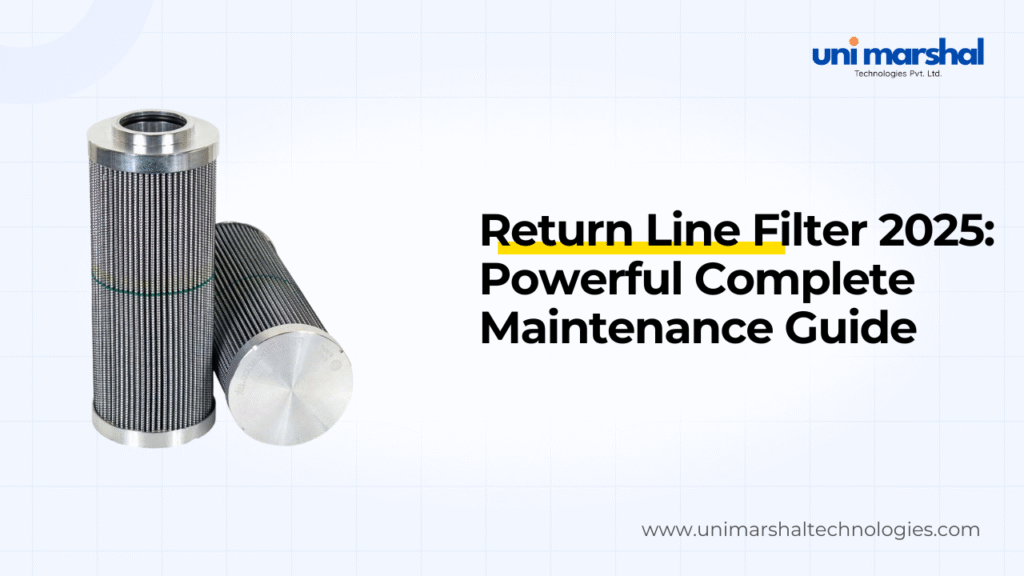
SECTION A : What is a Return Line Filter and Its Role in Hydraulic Systems
=> The Return Line Filter ensures clean hydraulic fluid, protecting system components from damage.
~Purpose of a Return Line Filter
| Feature | Explanation | Benefits |
| Filtration | Removes dirt, metal particles, and debris | Prevents wear and tear |
| Placement | Installed in hydraulic return line | Ensures fluid is clean before re-entry |
| Efficiency | Captures tiny contaminants | Maintains system performance |
| Lifespan | Long-lasting filter media | Reduces maintenance frequency |
~Key Functions of Hydraulic Return Line Filter
- Protects pumps and valves from contamination
- Improves fluid cleanliness for better performance
- Enhances hydraulic system reliability
- Supports overall system longevity
- Reduces repair costs over time
~How It Works
- Fluid flows from actuators to the return line
- Filter traps particles before fluid re-enters tank
- Clean fluid circulates, preventing internal damage
~Signs You Need a Return Line Filter Replacement
- Unusual system noise or vibrations
- Reduced system efficiency or slower operations
- Visible contamination in hydraulic fluid
- Increased maintenance requirements
~Benefits of Using a Return Line Filter
- Maintains hydraulic fluid quality
- Prevents premature system failure
- Ensures smooth, reliable operations
- Reduces downtime and repair costs
~Choosing the Right Filter
- Match filter size to hydraulic system specifications
- Consider micron rating for effective particle removal
- Ensure compatibility with fluid type
~Maintenance Tips
- Inspect filter regularly for debris accumulation
- Replace according to manufacturer guidelines
- Keep records of filter changes for system health
~Hydraulic Return Line Filter Function
- Controls fluid cleanliness
- Protects critical system components
- Reduces operational costs
- Enhances system lifespan
SECTION B : How to Choose the Right Return Line Filter for Your System
=> Choosing the correct Return Line Filter ensures optimal performance and protection for your hydraulic system.
~Factors to Consider When Selecting a Filter
| Factor | Explanation | Benefit |
| Flow Rate | Must match hydraulic system requirements | Prevents pressure drop |
| Micron Rating | Determines particle size captured | Protects sensitive components |
| Compatibility | Match filter with fluid type | Avoids chemical damage |
| Operating Pressure | Suitable for system pressure | Ensures safe operations |
| Size & Type | Fits system connection | Easy installation |
~Return Line Filter Sizing Criteria
- Determine system flow rate accurately
- Check maximum system pressure
- Choose micron rating based on contamination level
- Ensure proper filter dimension and connection type
~Key Features to Look For
- High-efficiency filtration media
- Durable construction for long service life
- Easy maintenance and replacement
- Pressure indicators for monitoring
~Installation Tips
- Install in hydraulic return line only
- Ensure correct flow direction
- Avoid areas with high turbulence
- Use proper mounting brackets
~Maintenance Recommendations
- Inspect regularly for clogging
- Replace filter according to usage
- Record maintenance schedule for reliability
~Benefits of Correct Selection
- Protects pumps and valves
- Improves hydraulic system efficiency
- Reduces downtime and repair costs
- Extends component lifespan
~Common Mistakes to Avoid
- Using wrong micron rating
- Ignoring flow and pressure requirements
- Poor installation practices
- Delaying filter replacement
~Troubleshooting Selection Issues
- Check for frequent pressure drops
- Inspect for contamination bypass
- Review filter compatibility with fluid
- Adjust filter size if necessary
SECTION C : Top Performance Issues with Return Line Filters and How to Fix Them
=> A Return Line Filter can fail if clogged or misused, affecting hydraulic system efficiency.
~Common Performance Issues
| Issue | Cause | Effect |
| Clogging | Excess dirt or debris | Reduced fluid flow, increased pressure |
| Bypass | Worn filter or damage | Unfiltered fluid damages components |
| Leakage | Improper installation | Fluid loss, system inefficiency |
| Pressure Drop | Incorrect micron rating | Reduced system performance |
| Contamination | Incompatible fluid or environment | Component wear and tear |
~Return Line Filter Troubleshooting
- Inspect filter regularly for dirt accumulation
- Check pressure drop across the filter
- Verify correct installation and flow direction
- Replace damaged or worn filter elements
~Signs of a Malfunctioning Filter
- Unusual system noise or vibrations
- Slower hydraulic operations
- Visible fluid contamination
- Frequent maintenance issues
~How to Fix Common Issues
- Clean or replace clogged filters
- Ensure proper filter sizing and micron rating
- Tighten or reseal installation points
- Use compatible hydraulic fluid
~Preventive Measures
- Schedule regular inspections
- Monitor system pressure and flow
- Use high-quality replacement filters
- Keep spare filters on hand
~Benefits of Troubleshooting
- Improves hydraulic system reliability
- Reduces component wear and repair costs
- Enhances fluid cleanliness
- Prevents unexpected downtime
~Tips for Filter Longevity
- Avoid exceeding operating pressure
- Prevent contamination during maintenance
- Replace filter according to schedule
- Keep surrounding area clean
~Advanced Checks
- Use pressure indicators for real-time monitoring
- Track filter performance logs
- Adjust maintenance intervals based on usage
- Ensure proper fluid compatibility

SECTION D : Installation Best Practices for Return Line Filters in 2025
=> Installing a Return Line Filter correctly ensures clean hydraulic fluid and long-lasting system performance.
~Key Installation Guidelines
| Step | Description | Tip |
| Position | Install in the hydraulic return line | Ensure easy access for maintenance |
| Flow Direction | Follow marked arrow on filter | Avoid reverse flow issues |
| Mounting | Secure firmly using brackets | Prevent vibrations and leaks |
| Clearance | Leave space for removal | Easy filter replacement |
| Orientation | Vertical or as recommended | Avoid sediment buildup |
~Pre-Installation Checks
- Confirm filter type matches system specifications
- Inspect new filter for damage
- Check connections for proper threading
- Ensure clean hydraulic fluid in the system
~Installation Steps
- Turn off the hydraulic system before installation
- Connect inlet and outlet hoses securely
- Tighten fittings without over-torquing
- Verify flow direction is correct
~Maintenance-Friendly Setup
- Place filter where inspection is easy
- Allow space for pressure indicators
- Avoid high-turbulence areas
- Keep surrounding area clean
~Safety Precautions
- Wear protective gear during installation
- Release system pressure before handling filter
- Handle filter carefully to prevent damage
- Follow manufacturer instructions closely
~Common Mistakes to Avoid
- Ignoring flow direction
- Over-tightening fittings
- Using wrong filter type
- Installing in hard-to-reach locations
~Benefits of Proper Installation
- Ensures efficient hydraulic performance
- Reduces system contamination risk
- Extends filter and component lifespan
- Minimizes unplanned maintenance
~Post-Installation Checks
- Monitor pressure drop across filter
- Inspect for leaks after start-up
- Test system for smooth operation
- Record installation date for maintenance schedule
~Tips for Long-Term Performance
- Replace filter as per schedule
- Avoid fluid contamination during service
- Keep filter housing clean
- Track filter performance over time
SECTION E : Maintenance Schedule & Checklist for Return Line Filters
=> Regular maintenance of a Return Line Filter ensures clean hydraulic fluid and prevents system failure.
~Maintenance Checklist
| Task | Frequency | Notes |
| Visual Inspection | Weekly | Check for leaks and damage |
| Pressure Drop Check | Monthly | Ensure filter is not clogged |
| Filter Replacement | As per manufacturer | Replace used filter element |
| Fluid Quality Check | Monthly | Confirm hydraulic fluid cleanliness |
| Cleaning Surroundings | Weekly | Prevent external contamination |
~Daily Maintenance Tips
- Inspect filter housing for leaks
- Check fluid levels
- Ensure proper system pressure
- Look for unusual noises
~Weekly Maintenance Actions
- Clean filter exterior
- Inspect connections and fittings
- Check pressure indicators
- Verify flow direction
~Monthly Maintenance Actions
- Replace filter element if required
- Test system performance
- Record maintenance activities
- Check for contamination in fluid
~Signs a Filter Needs Attention
- Pressure drop across filter rises
- System performance slows down
- Contamination visible in fluid
- Frequent maintenance alerts
~Best Practices for Longevity
- Always use correct replacement filter
- Avoid exceeding system pressure
- Prevent contamination during servicing
- Track filter usage and schedule
~Tools Needed for Maintenance
- Wrenches and fittings
- Clean cloth or rags
- Pressure gauges
- Replacement filter element
~Tips for Easy Maintenance
- Keep maintenance log for every filte
- Label filters with installation dates
- Train operators on inspection procedures
- Store spare filters nearby
~Advantages of Regular Maintenance
- Extends filter and component lifespa
- Maintains hydraulic system efficiency
- Reduces unexpected downtime
- Ensures smooth, reliable operations
SECTION F : Understanding Micron Ratings, Flow Rate & Pressure in Return Line Filters
=> A Return Line Filter’s micron rating, flow rate, and pressure determine hydraulic system efficiency.
~Micron Ratings Explained
| Micron Rating | Purpose | Impact |
| 3-10 µm | Captures very fine particles | Protects sensitive components |
| 10-25 µm | Medium particle filtration | Prevents minor wear |
| 25-50 µm | Coarse particle removal | Reduces debris accumulation |
| 50+ µm | Heavy debris | Suitable for less critical systems |
~Flow Rate Importance
- Must match system requirements
- Prevents pressure drop
- Ensures consistent fluid circulation
- Avoids filter overload
~Pressure Considerations
- Filter must handle system’s maximum pressure
- Incorrect pressure causes leaks or bypass
- Monitor with pressure gauges
- Avoid exceeding manufacturer limits
~Effects of Improper Micron Rating
- Too fine: frequent clogging
- Too coarse: contamination passes through
- Reduces system efficiency
- Increases maintenance costs
~Tips for Selecting Correct Flow & Pressure
- Check system flow specifications
- Verify operating pressure limits
- Consider temperature and fluid type
- Use manufacturer guidelines
~Maintenance Linked to Flow & Pressure
- Inspect filter for pressure drop regularly
- Replace filter if flow reduces
- Clean surrounding areas to prevent external contamination
- Record system performance logs
~Benefits of Proper Micron, Flow, and Pressure
- Protects pumps, valves, and actuators
- Maintains hydraulic fluid cleanliness
- Reduces component wear and repair frequency
- Enhances system reliability and lifespan
~Quick Reference Checklist
- Correct micron rating chosen
- Flow rate matches system
- Pressure within limits
- Regular inspections and maintenance
~Monitoring Tips
- Install pressure indicators
- Track flow and pressure trends
- Inspect filter visually for clogging
- Adjust maintenance intervals as needed

SECTION G : Cost Savings and Longevity Benefits of Using a Quality Return Line Filter
=> A high-quality Return Line Filter reduces maintenance costs and extends the lifespan of hydraulic systems.
~Financial Benefits
| Benefit | Description | Impact |
| Reduced Repairs | Prevents component damage | Saves money on replacements |
| Less Downtime | Reliable filtration avoids system stoppages | Increases productivity |
| Lower Maintenance | Longer-lasting filter media | Reduces service frequency |
| Efficient Fluid Use | Cleaner fluid requires less replacement | Saves on hydraulic fluid |
~Long-Term System Protection
- Protects pumps, valves, and actuators from wear
- Maintains consistent hydraulic pressure
- Reduces contamination-related failures
- Improves overall system reliability
~Energy Efficiency
- Clean filters reduce pump strain
- Optimizes fluid flow and pressure
- Lowers energy consumption
- Extends pump lifespan
~Maintenance Savings
- Fewer emergency replacements
- Less frequent filter changes
- Reduces labor costs
- Prevents costly system failures
~Tips to Maximize Longevity
- Use recommended filter type and micron rating
- Follow regular inspection schedule
- Keep fluid clean during maintenance
- Replace before end-of-life
~Performance Benefits
- Maintains smooth system operation
- Prevents unexpected breakdowns
- Improves hydraulic efficiency
- Ensures reliable fluid circulation
~Quick Reference Checklist
- Verify filter quality before purchase
- Monitor system pressure and flow
- Inspect filter regularly
- Replace according to schedule
~Best Practices
- Avoid overloading the filter
- Use compatible hydraulic fluids
- Record installation and replacement dates
- Train operators on proper handling
~Impact Overview
- Reduces long-term operational costs
- Protects critical hydraulic components
- Enhances overall system performance
- Maximizes filter lifespan and efficiency
SECTION H : Common Mistakes to Avoid with Return Line Filters
=> A Return Line Filter can fail if misused, causing hydraulic system inefficiency and component damage.
~Frequent Installation Errors
| Mistake | Cause | Impact |
| Wrong Flow Direction | Ignoring filter arrow | Fluid bypass, system damage |
| Improper Mounting | Loose or unstable fittings | Vibration and leaks |
| Wrong Filter Type | Not matching system specs | Reduced filtration efficiency |
| Poor Clearance | Difficult access | Hard filter replacement |
~Maintenance Mistakes
- Ignoring regular inspections
- Reusing damaged filter elements
- Overlooking pressure drop indicators
- Not cleaning surroundings before service
~Operational Errors
- Using incompatible hydraulic fluids
- Exceeding system pressure limits
- Running system with clogged filters
- Delaying replacements for convenience
~Signs of Mistakes
- Increased system noise or vibrations
- Reduced hydraulic performance
- Visible contamination in fluid
- Frequent emergency maintenance
~How to Avoid Installation Mistakes
- Always follow manufacturer guidelines
- Verify filter type and orientation
- Ensure proper mounting and clearance
- Check all connections for tightness
~Preventive Maintenance Tips
- Inspect filter weekly for debris
- Replace filter on schedule
- Track maintenance logs for reliability
- Monitor system pressure regularly
~Training and Awareness
- Train operators on proper handling
- Highlight common mistakes in manuals
- Encourage reporting issues immediately
- Use visual guides for installation
~Checklist for Correct Usage
- Correct flow direction verified
- Proper filter type and micron rating
- Secure mounting with easy access
- Regular inspection and replacement followed
~Best Practices
- Always handle filters carefully
- Avoid system overloads
- Keep fluid clean during service
- Record all maintenance activities
FREQUENTLY ASKED QUESTIONS
Other Investors Are Exploring
return line maintenance || return line filter installation || return line filter troubleshooting || return line filter sizing || return line filter micron rating || return line filter flow rate || return line filter pressure drop || return line filter replacement || return line filter benefits || return line filter lifespan || Return Line Filter Price || Return Line Filter In India || Return Line Filter Maintenance