

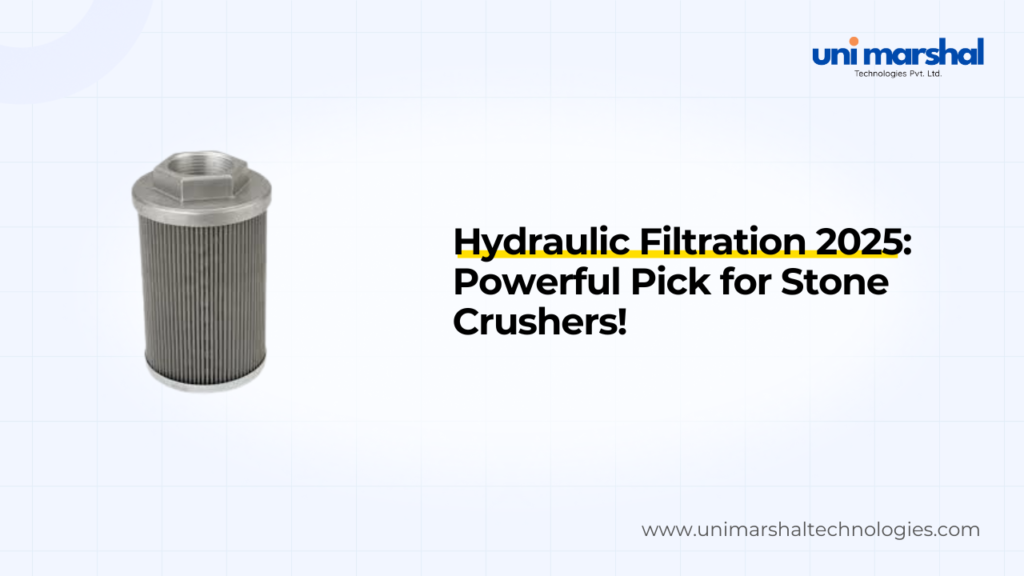
SECTION A: Best Hydraulic Filter Types for Stone Crushers
=> Hydraulic filtration is crucial for maintaining the efficiency of stone crushers.
=> Clean hydraulic fluid ensures smooth operation, reduces wear, and extends machine life.
~ Why Hydraulic Filters Are Important
- Prevent dirt, dust, and metal particles from entering hydraulic systems.
- Protect pumps, valves, and cylinders from damage.
- Reduce downtime due to system failure.
- Improve overall machine efficiency and lifespan.
~ Common Types of Hydraulic Filters for Stone Crushers
| Filter Type | Key Features | Benefits | Ideal Use |
| Suction Strainer | Placed at the pump inlet | Protects pump from large debris | Initial stage filtration |
| Pressure Filter | Installed after the pump | Removes fine particles | Maintains fluid cleanliness |
| Return Line Filter | Positioned before fluid returns to the tank | Captures contaminants from system | Final filtration stage |
| Inline Filter | Compact and easy to install | Good for small systems | Space-constrained setups |
| Spin-on Filter | Replaceable element | Quick maintenance | Quick servicing needs |
~ Key Considerations
- Filtration Rating: Choose filters suitable for the crusher’s hydraulic system pressure.
- Flow Rate: Ensure filters can handle the hydraulic oil volume.
- Maintenance: Select filters with easy access for replacement.
- Material Quality: Use filters made from durable media to resist wear.
~ Benefits of Using High-Quality Hydraulic Filter Elements
- Reduce machinery downtime.
- Prevent costly repairs.
- Maintain consistent hydraulic pressure.
- Ensure smooth crusher operation.
~ Tips for Efficient Hydraulic Filtration
- Check filters regularly and replace if clogged.
- Use filters compatible with your system’s hydraulic oil.
- Combine suction, pressure, and return filters for complete protection.
- Monitor system performance to detect early contamination signs.
SECTION B: How Often to Change Hydraulic Filters in Crushers
=> Hydraulic filtration is crucial for the smooth operation of crushers.
=> Clean hydraulic fluid ensures machinery runs efficiently and reduces damage to components.
~ Why Changing Hydraulic Filters is Important
- Removes dirt, metal particles, and debris from the hydraulic system.
- Prevents wear and tear on hydraulic pumps and valves.
- Maintains consistent pressure and performance.
- Extends the life of the crusher equipment.
~ Signs It’s Time for Hydraulic Filter Replacement
- Reduced hydraulic system efficiency.
- Unusual noise from the hydraulic pump.
- Slow movement of crusher components.
- Contaminated or dark-colored hydraulic oil.
~ Recommended Replacement Schedule
| Crusher Type | Operating Hours | Filter Change Frequency | Notes |
| Jaw Crusher | 500 hrs | Every 6 months | Check oil condition too |
| Cone Crusher | 600 hrs | Every 8 months | Heavy loads may need earlier change |
| Impact Crusher | 400 hrs | Every 5 months | Inspect filters monthly |
| Mobile Crusher | 300 hrs | Every 4 months | Frequent use requires closer monitoring |
~ Tips for Easy Maintenance
- Always keep spare filters on hand.
- Use high-quality filters suitable for your machine.
- Inspect filters regularly for clogging or damage.
- Record filter replacement dates to maintain a schedule.
~ Benefits of Regular Hydraulic Filtration
- Reduces repair costs due to less wear.
- Improves machine reliability and performance.
- Minimizes downtime from unexpected failures.
- Keeps hydraulic fluid clean, extending its life.
SECTION C: Signs of Hydraulic Oil Contamination in Crushers
=> Hydraulic filtration is essential to keep crushers running efficiently.
=> Contaminated hydraulic oil can cause serious damage if not detected early.
=> Here are the key signs to watch for:
~ Common Signs of Contaminated Hydraulic Oil
| Sign | What It Means | Key Points |
| Unusual Noise | Grinding or whining sounds in hydraulic system | – May indicate dirt or metal particles in oil – Can damage pumps and valves |
| Overheating | Hydraulic system temperature rises abnormally | – Contaminated hydraulic oil reduces lubrication – Increases wear on components |
| Sluggish Operation | Slow response in crusher movements | – Dirt clogs valves – Reduces efficiency and power |
| Foaming Oil | Excess bubbles or foam in oil | – Trapped air due to contamination – Can cause erratic movement |
| Discoloration | Oil turns dark or milky | – Presence of water, dirt, or metal particles – Sign of early contamination |
| Frequent Filter Clogging | Filters need replacement often | – Indicates high contamination load – Reduces system reliability |
~ Additional Warning Signs
- Leaks around seals due to high pressure buildup
- Metallic particles in the sight glass
- Increased vibration in hydraulic components
~ How to Minimize Risks
- Regular hydraulic filtration checks
- Change filters as per manufacturer recommendation
- Use clean and compatible hydraulic fluids
- Inspect for contamination during routine maintenance
~ Why Early Detection Matters
- Prevents costly repairs
- Maintains crusher performance
- Extends hydraulic component life
- Ensures safety for operators

SECTION D: Right Hydraulic Oil Grade for Stone Crusher Systems
=> Hydraulic filtration plays a critical role in keeping your stone crusher system running smoothly.
=> Choosing the correct hydraulic oil ensures efficiency, reduces wear, and extends equipment life.
~ Why Hydraulic Oil Matters
- Protects hydraulic components from wear and tear
- Maintains consistent system pressure
- Prevents overheating and sludge formation
- Improves performance and reduces downtime
~ Key Factors in Hydraulic Oil Selection
=> Selecting the right oil depends on several factors. Consider the following:
- Viscosity: Determines flow and lubrication efficiency
- Temperature Range: Ensures oil performs in hot or cold conditions
- Additives: Protect against corrosion and oxidation
- Compatibility: Works with system seals and metals
~ Recommended Hydraulic Oil Grades
| Component | Recommended Grade | Reason |
| Pumps | ISO VG 46 | Smooth operation, reduces wear |
| Motors | ISO VG 68 | High pressure tolerance |
| Valves | ISO VG 32 | Efficient flow and response |
| Cylinders | ISO VG 46 | Prevents leaks and ensures sealing |
~ Benefits of Proper Oil Use
- Reduces maintenance costs
- Extends lifespan of components
- Minimizes breakdowns
- Improves machine efficiency
~ Tips for Maintenance
- Check oil level daily
- Replace oil according to manufacturer’s schedule
- Use proper hydraulic filtration to remove contaminants
- Avoid mixing different oil brands
~ Signs You Need Oil Change
- Increased system noise
- Slow hydraulic response
- Dark or foamy oil
- Excessive heat generation
~ Quick Guide to Hydraulic Oil Selection
- Always follow manufacturer’s recommendations
- Consider load and operating conditions
- Regularly monitor oil condition
- Use hydraulic oil selection tools or charts to pick the correct grade
~ Why Filtration is Essential
- Removes dirt, metal particles, and water
- Maintains consistent hydraulic pressure
- Prevents pump and valve damage
- Extends oil life
SECTION E: Common Hydraulic System Failures in Stone Crushers
=> Hydraulic filtration is critical for smooth operation in stone crushers.
=> Dirty or contaminated fluid can cause major hydraulic system failures, leading to downtime and expensive repairs.
=> Understanding common failures helps operators prevent issues effectively.
1. Contaminated Hydraulic Fluid
- Particles, dust, and water reduce system efficiency.
- Leads to increased wear on pumps, valves, and cylinders.
- Can cause overheating and inconsistent crusher performance.
2. Pump Failure
- Low pressure or no pressure indicates pump issues.
- Causes: air in system, worn components, or poor hydraulic filtration.
- Early detection avoids severe breakdowns.
3. Valve Malfunction
- Hydraulic valves control fluid direction and pressure.
- Malfunction leads to slow operation or uneven crushing.
- Debris in fluid can jam valves.
4. Cylinder Damage
- Leaking or sticking cylinders affect crusher movement.
- Often caused by contaminated fluid or worn seals.
- Proper hydraulic system troubleshooting can identify issues early.
5. Hose and Fitting Leaks
- Leaks reduce system pressure and efficiency.
- Inspect hoses regularly for cracks or wear.
- Tighten or replace faulty fittings immediately.
~ Quick Reference Table for Failures
| Failure Type | Common Signs | Causes | Preventive Measures |
| Contaminated Fluid | Overheating, sluggish operation | Dirt, water, particles | Regular hydraulic filtration, fluid checks |
| Pump Failure | Low/no pressure, noise | Worn parts, air, poor filtration | Check pumps, maintain clean fluid |
| Valve Malfunction | Slow, uneven movement | Blocked or worn valves | Clean valves, monitor filtration |
| Cylinder Damage | Leaks, sticking | Seal wear, dirty fluid | Inspect seals, clean hydraulic fluid |
| Hose/Fitting Leaks | Pressure drop, oil leaks | Cracks, loose fittings | Regular inspection, replace damaged parts |
~ Tips for Maintenance
- Use quality hydraulic industrial filtration to prevent contamination.
- Regularly inspect pumps, cylinders, and valves.
- Check fluid levels and replace dirty fluid.
- Monitor pressure gauges for abnormalities.
- Follow manufacturer guidelines for maintenance schedules.
SECTION F: Improve Crusher Performance with Better Filtration
=> Hydraulic filtration plays a key role in maintaining crusher efficiency.
=> Clean hydraulic fluid ensures smooth operations, reduces wear, and extends machine life.
=> Proper filtration is critical for heavy machinery performance.
~ Why Hydraulic Filter Matters
- Prevents dirt, metal particles, and debris from entering hydraulic systems.
- Reduces maintenance costs by protecting pumps and motors.
- Maintains consistent pressure and performance of crushers.
- Enhances operational efficiency and machine lifespan.
~ Key Benefits of Better Filtration
| Benefit | Description | Quick Points |
| Reduced Wear | Prevents abrasive particles from damaging components | – Protects pumps – Extends motor life – Avoids unplanned downtime |
| Improved Efficiency | Cleaner hydraulic fluid means smoother operation | – Maintains optimal pressure – Reduces energy consumption – Enhances crusher output |
| Lower Maintenance | Less contamination equals fewer repairs | – Fewer breakdowns – Reduced part replacement – Saves operational costs |
| Longer Machine Life | Hydraulic components last longer | – Preserves seals and valves – Reduces frequent repairs – Increases ROI |
~ Signs You Need Better Filtration
- Unusual noise in the hydraulic system.
- Slow or jerky crusher operation.
- Frequent oil changes or filter replacements.
- Overheating of hydraulic components.
~ Tips to Improve Hydraulic Filtration Efficiency
- Use high-quality filters designed for your crusher.
- Regularly check and replace filters as per schedule.
- Monitor hydraulic fluid cleanliness often.
- Avoid mixing incompatible hydraulic fluids.
~ Choosing the Right Hydraulic Filters
- Consider micron ratings that match your system requirements.
- Look for filters that improve hydraulic industrial filtration efficiency.
- Check compatibility with oil types used in your crusher.
- Opt for reliable brands with proven performance.
~ Quick Maintenance Checklist
- Inspect filters weekly.
- Check for fluid leaks around the hydraulic system.
- Maintain proper fluid levels consistently.
- Keep a log of filter replacements and oil changes.

SECTION G: Why Hydraulic Filters Fail Early in Heavy Crushers
=> Hydraulic filtration is critical for keeping heavy crusher systems clean and efficient.
=> Early filter failure can cause downtime, expensive repairs, and reduced machine performance.
=> Understanding the reasons can help avoid these issues.
~ ~Common Causes of Hydraulic Filter Failure
=> Hydraulic filters can fail due to several factors.
=> Knowing these helps in preventive maintenance:
- Contaminated oil: Dirt, dust, and metal particles can clog filters quickly.
- Incorrect filter type: Using a filter not suited for heavy crushers reduces lifespan.
- High pressure spikes: Sudden pressure surges damage filter media.
- Poor installation: Misalignment or loose fittings can cause bypass and failure.
- Excessive operating temperature: High heat degrades filter material.
~ Quick Overview of Hydraulic Filter Failure Causes
| Cause | Effect | Prevention Tips |
| Contaminated oil | Clogs filter, reduces efficiency | Regular oil analysis, use clean oil |
| Wrong filter type | Shortened filter life | Match filter with system specifications |
| Pressure spikes | Tears filter media | Install pressure relief valves |
| Poor installation | Bypass contamination | Follow proper installation procedure |
| High operating temperature | Material breakdown, reduced performance |
Monitor system temperature, add cooling |
~ Signs of Early Filter Failure
=> Look for these signs to catch issues before serious damage:
- Reduced crusher performance
- Unusual noise in the hydraulic system
- Increased oil contamination levels
- Frequent replacement of filters
~ Tips to Extend Filter Life
=> Simple practices can significantly increase filter lifespan:
- Use high-quality hydraulic filters suitable for heavy crushers
- Perform regular hydraulic filter maintenance
- Monitor oil condition and replace when necessary
- Avoid excessive load and heat during operations
=> Understanding hydraulic filter failure causes helps operators prevent downtime and costly repairs. => Consistent maintenance and proper filter selection are essential for heavy crusher efficiency.
SECTION H: High-Efficiency Filter Elements for Heavy-Duty Crushers
=> Hydraulic filtration is essential for maintaining the performance of heavy-duty crushers.
=> Using the right filter elements keeps your hydraulic system clean and prevents machinery breakdowns.
~ Why High-Efficiency Filter Elements Are Important
- Remove dirt, dust, and metal particles from hydraulic oil
- Protect pumps, valves, and other hydraulic components
- Reduce maintenance costs and extend equipment life
- Ensure consistent hydraulic pressure for smooth operations
~ Key Features of High-Efficiency Filter Elements
| Feature | Benefit |
| Fine Filtration Media | Traps microscopic contaminants effectively |
| Durable Construction | Withstands high pressure and heavy loads |
| High Dirt Holding Capacity | Reduces frequency of replacements |
| Corrosion-Resistant Materials | Ensures long-lasting performance |
| Easy Installation |
Minimizes downtime during maintenance |
~ Benefits of Using These Filter Elements
- Prevent hydraulic system failures
- Maintain consistent performance of crushers
- Improve safety by reducing unexpected breakdowns
- Save on operational and maintenance costs
~ How to Choose the Right Filter Element
- Match element size with your crusher’s specifications
- Check pressure ratings to ensure compatibility
- Consider oil type and operating conditions
- Look for high efficiency filter elements for best performance
~ Maintenance Tips
- Inspect filters regularly for clogging
- Replace elements as recommended by the manufacturer
- Use clean oil to prolong filter life
- Keep a record of filter changes for system tracking
SECTION I: Reduce Crusher Downtime with Proper Hydraulic Filtration
=> Hydraulic filtration is essential to keep crushers running efficiently.
=> Contaminants in hydraulic systems cause wear, breakdowns, and frequent maintenance.
=> Proper filtration ensures smooth operation and reduces costly downtime.
~ Why Hydraulic Filter Matters
- Prevents dirt, metal particles, and sludge from damaging components
- Maintains consistent hydraulic pressure for smooth crusher operation
- Extends the life of pumps, valves, and cylinders
- Reduces repair and replacement costs
~ Key Components of Hydraulic Industrial Filtration
| Component | Purpose | Benefits |
| Filter Element | Traps particles and impurities | Protects hydraulic pumps and valves |
| Breather Filter | Keeps airborne particles out | Prevents contamination from air |
| Suction Strainer | Screens large debris from oil | Ensures consistent fluid flow |
| Return Line Filter | Filters oil returning to the tank | Improves oil cleanliness and longevity |
~ Daily Practices to Reduce Downtime
- Inspect filters for clogging or damage regularly
- Monitor hydraulic oil levels and top up as needed
- Replace elements according to manufacturer guidelines
- Keep hydraulic tanks and systems clean to avoid contamination
~ Hydraulic Maintenance Tips
- Use high-quality filtration equipment to prevent frequent breakdowns
- Schedule regular inspections to detect early signs of wear
- Keep spare filters on hand for quick replacement
~ Benefits of Proper Filtration
- Minimizes unexpected crusher stoppages
- Maintains optimal machine performance
- Enhances equipment life and reduces operational costs
FREQUENTLY ASKED QUESTIONS
1. What does hydraulic filtration do in a stone crusher?
2. How often should hydraulic filters be changed in crushers?
3. How can I tell if my hydraulic oil is contaminated?
4. What hydraulic oil works best for stone crusher systems?
5. Why do hydraulic filters clog faster in stone crushers?
6. Can poor hydraulic filtration cause more downtime?
7. Why is hydraulic pressure low even after replacing the filter?
8. How do I choose the right hydraulic filter element?
9. What happens if I delay hydraulic filter maintenance?
10. Are high-efficiency hydraulic filters worth using?
Other Users Are Exploring
Hydraulic Filter || Hydraulic filter elements || Hydraulic filter replacement schedule || Contaminated hydraulic oil || High efficiency hydraulic filters || Hydraulic system troubleshooting crushers || Hydraulic oil selection || Hydraulic filter failure causes || Extend hydraulic pump life crushers || Crusher downtime prevention || Hydraulic Filter Manufacturer